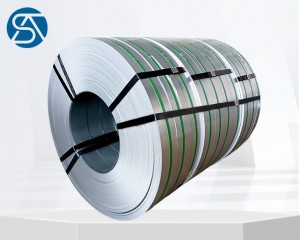
3105 aluminum coil is a non-heat-treatable aluminum-manganese alloy used for roofing, gutters, wall panels, closures and general formed sheet products. H14 and H24 are both commonly described as half-hard tempers, but they reach that strength range through different processing routes.
What H14 and H24 Mean
The H designation applies to strain-hardened wrought aluminum. The first digit describes the processing route and the second digit indicates the relative strain-hardening level.
- H14: strain-hardened only, at a nominal half-hard level.
- H24: strain-hardened and partially annealed, also at a nominal half-hard level.
A similar nominal hardness does not make the tempers interchangeable. Gauge, rolling history and partial annealing can influence forming response and residual stress.
3105-H14 vs H24 Comparison
| Factor | H14 | H24 |
|---|---|---|
| Temper route | Strain hardened | Strain hardened and partially annealed |
| Nominal level | Half-hard | Half-hard |
| Buyer focus | Strength, gauge and forming radius | Strength plus forming consistency |
Formability and Bend Performance
Temper selection should follow the forming operation. Roll forming, stamping, folding and deep profiles impose different requirements. Provide material thickness, bend direction, inside radius, forming sequence and surface requirements. Trial forming may be appropriate when tooling or appearance is critical.
Painted and Coated Coil
The purchase specification should distinguish the aluminum substrate from the coating system. State whether the order requires mill finish, pre-treatment, primer, paint or protective film. Coating cure cycles can affect final properties, so substrate temper, coating thickness, adhesion, gloss and color tolerance should be agreed.
Application Selection
Roofing and Wall Panels
Confirm gauge, profile depth, coating system, wind-load design and forming radius. H24 may be evaluated where consistent roll forming is important.
Gutters and Downspouts
Formability, coating durability and joining method should be reviewed together. The selected temper must suit bending and seaming.
Closures and General Sheet Products
Surface appearance, blanking performance, lubrication and dimensional consistency may be as important as tensile strength.
Standards and RFQ Requirements
ASTM B209/B209M covers aluminum-alloy flat sheet, coiled sheet and plate. ANSI H35.1/H35.1M defines alloy and temper designations. State the standard and revision, alloy/temper, thickness, width, coil ID/OD, coil weight, mechanical and bend requirements, surface/coating, edge condition, documents and packaging.
For product details, visit 3105-H14/H24 aluminum coil.
Frequently Asked Questions
Are H14 and H24 identical?
No. They target a similar nominal hardness level but use different processing routes. Verify properties and forming response for the ordered gauge.
Which temper is better for roll forming?
H24 is often evaluated for forming consistency, but tooling, thickness, bend radius and coating process must be considered.
Can H14 replace H24?
Not without approval. The temper is part of the material specification and can affect manufacturing performance.
Send temper, thickness, width, coil requirements, coating and quantity through the SASA ALUMINUM product page.
Post time: Aug-11-2026