-
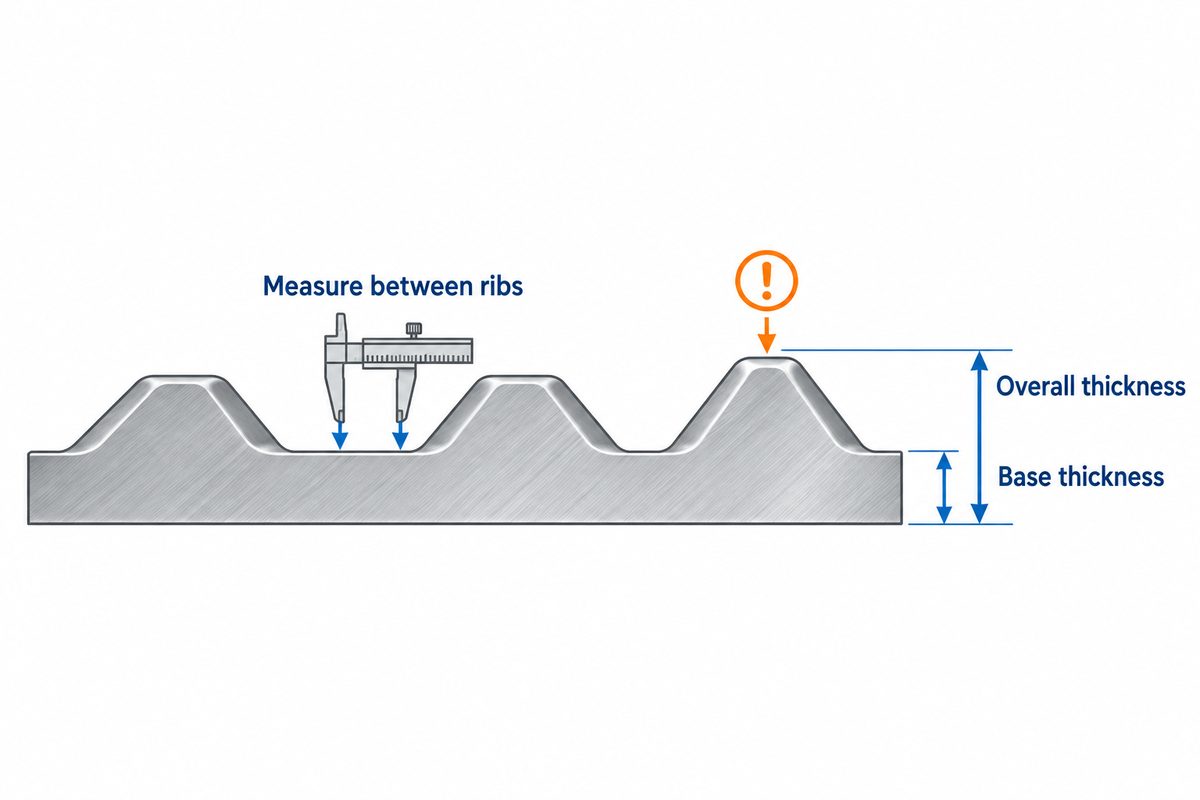
Do Not Order Five-Bar Plate by “3 mm” Alone Aluminum tread plate thickness can mean either the smooth base thickness or the overall thickness measured to the top of the raised pattern. Those values are not interchangeable. If a drawing, quotation or purchase order says only “3 mm checker plate,”...Read more »
-
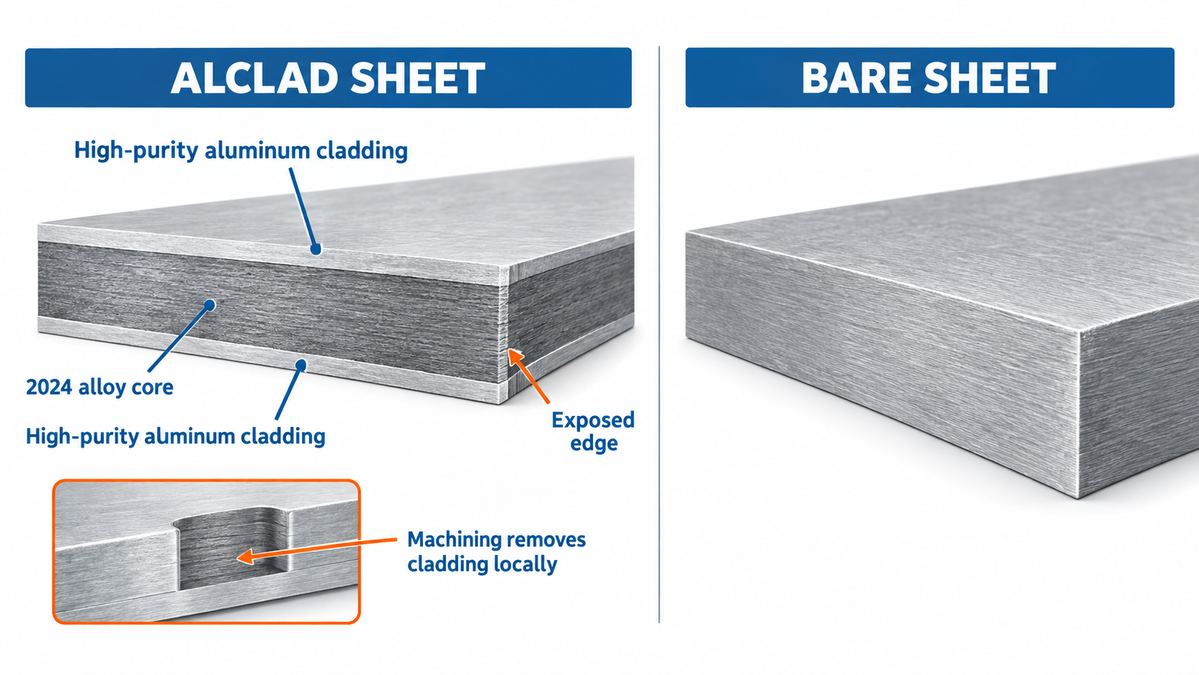
Alclad vs Bare Aluminum: What Buyers Need to Know Alclad aluminum combines a high-strength aluminum-alloy core with thin, corrosion-resistant aluminum-alloy surface layers that are metallurgically bonded during rolling. Bare aluminum sheet has no separate cladding layer: the exposed surface is t...Read more »
-
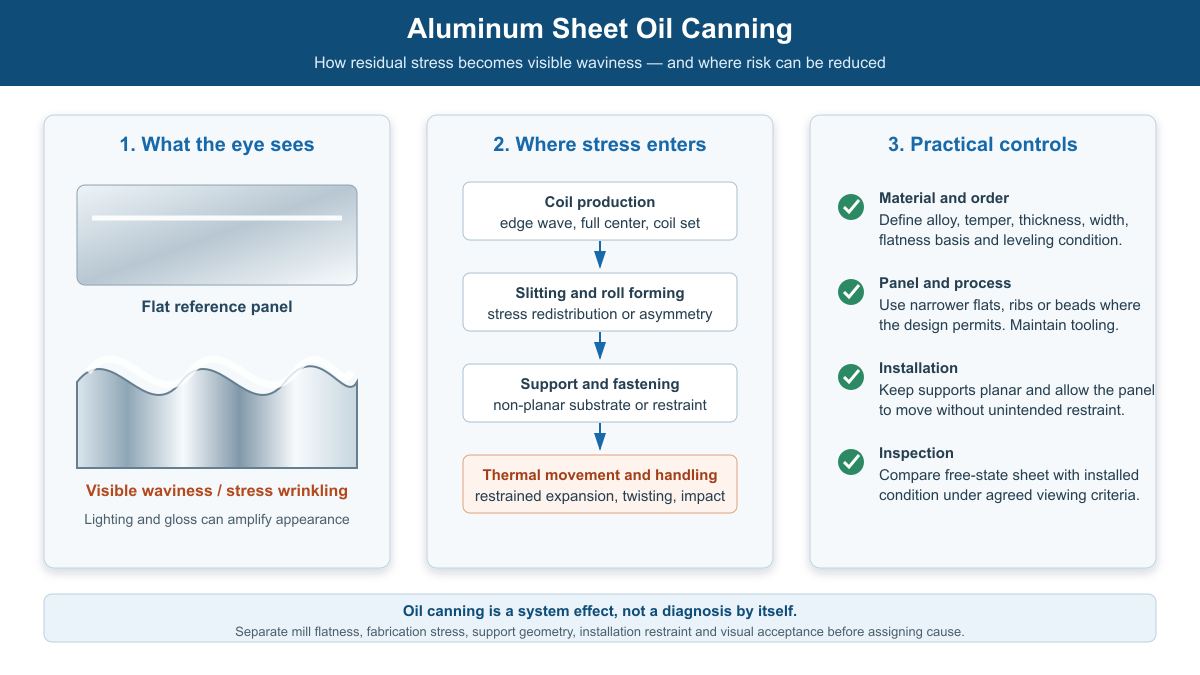
Aluminum Sheet Oil Canning: Causes, Inspection and Prevention Aluminum sheet oil canning is visible waviness in a broad, nominally flat area. It is also called stress wrinkling, elastic buckling or a trapped buckle. The appearance can originate in the coil, be released during slitting or forming...Read more »
-
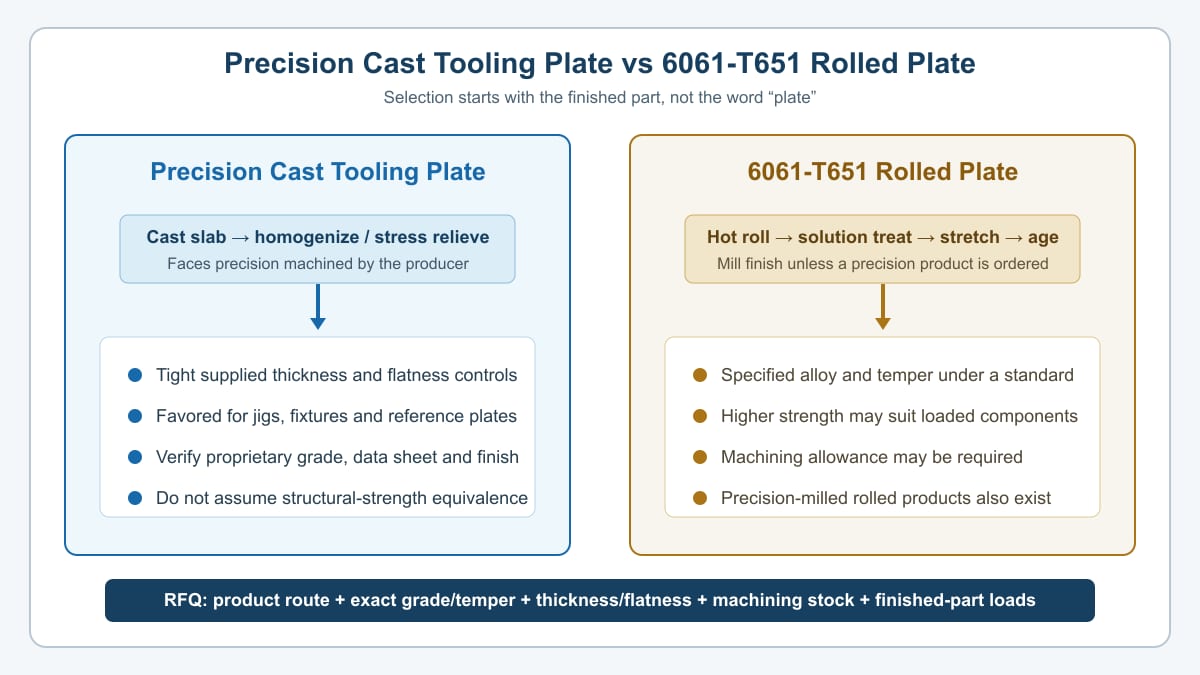
Aluminum Tooling Plate vs 6061 Rolled Plate: Selection Guide Aluminum tooling plate and 6061-T651 rolled plate are not interchangeable descriptions. Precision cast tooling plate is normally selected for supplied flatness, thickness consistency and dimensional stability during machining. 6061-T65...Read more »
-
5083 Aluminum Round Bar: Temper, Standards and RFQ Guide 5083 aluminum round bar is considered when a machined or fabricated component needs a combination of useful strength, weldability and resistance to aggressive environments. The alloy number alone is not enough for purchasing. A complete or...Read more »
-
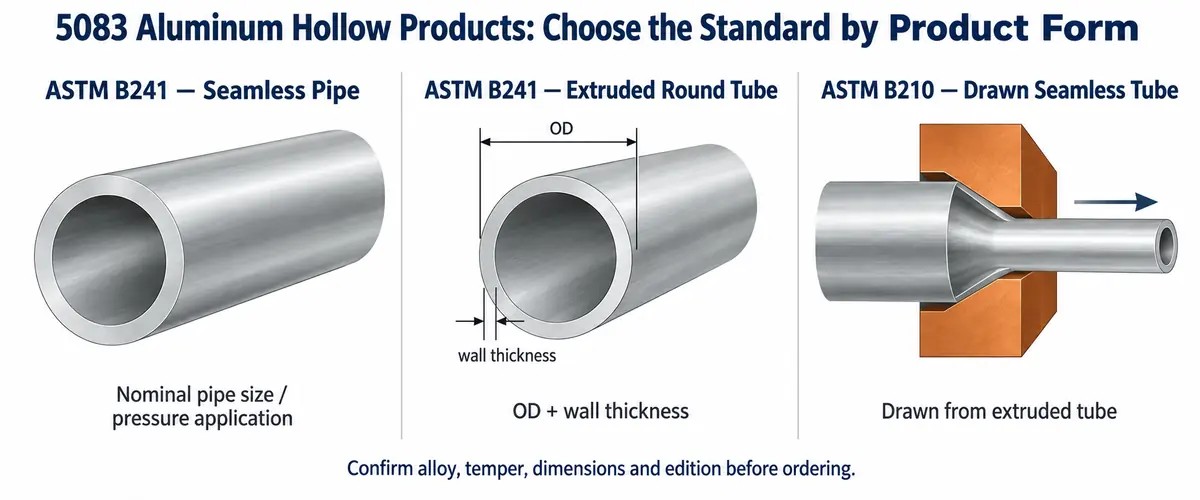
5083 Aluminum Seamless Pipe: Standards, Tempers and RFQ Guide 5083 aluminum seamless pipe is often requested for marine and other corrosion-sensitive fabrications, but the alloy number alone is not a complete purchase specification. A reliable inquiry should identify whether the item is pipe or...Read more »
-
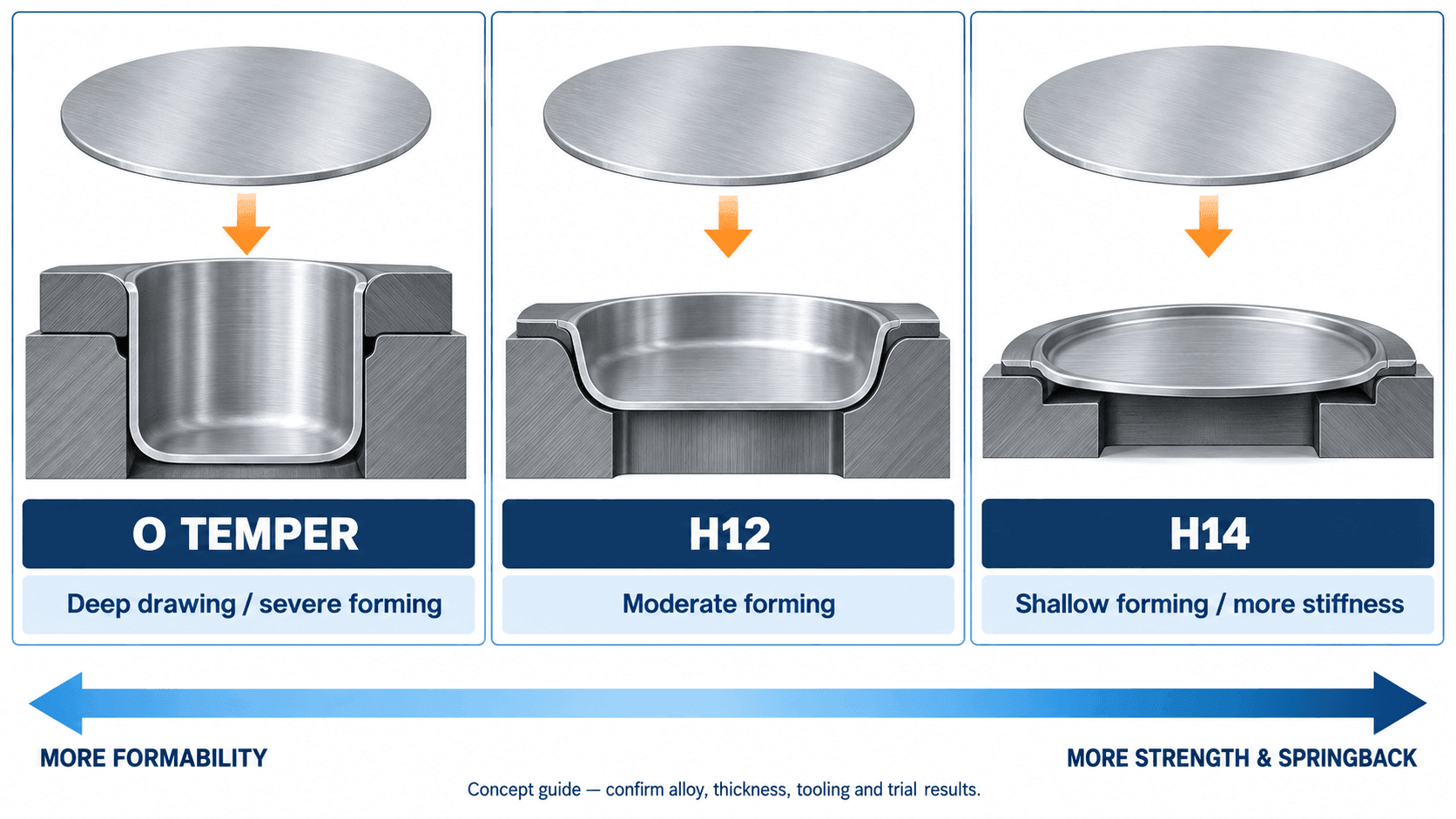
Aluminum Disc Temper O vs H12 vs H14: Formability and Selection Guide Quick answer: O temper is the usual starting point for severe forming because it offers the highest ductility of the three. H12 provides a middle ground for moderate forming, while H14 offers higher strength and stiffness bu...Read more »
-
Aluminum Sheet Springback: Causes, Measurement and Bending Control Aluminum sheet springback is the elastic recovery that occurs after a bending or forming load is removed. The part usually opens away from the angle held under load, so a bend formed to the tool angle may not remain at that angl...Read more »
-
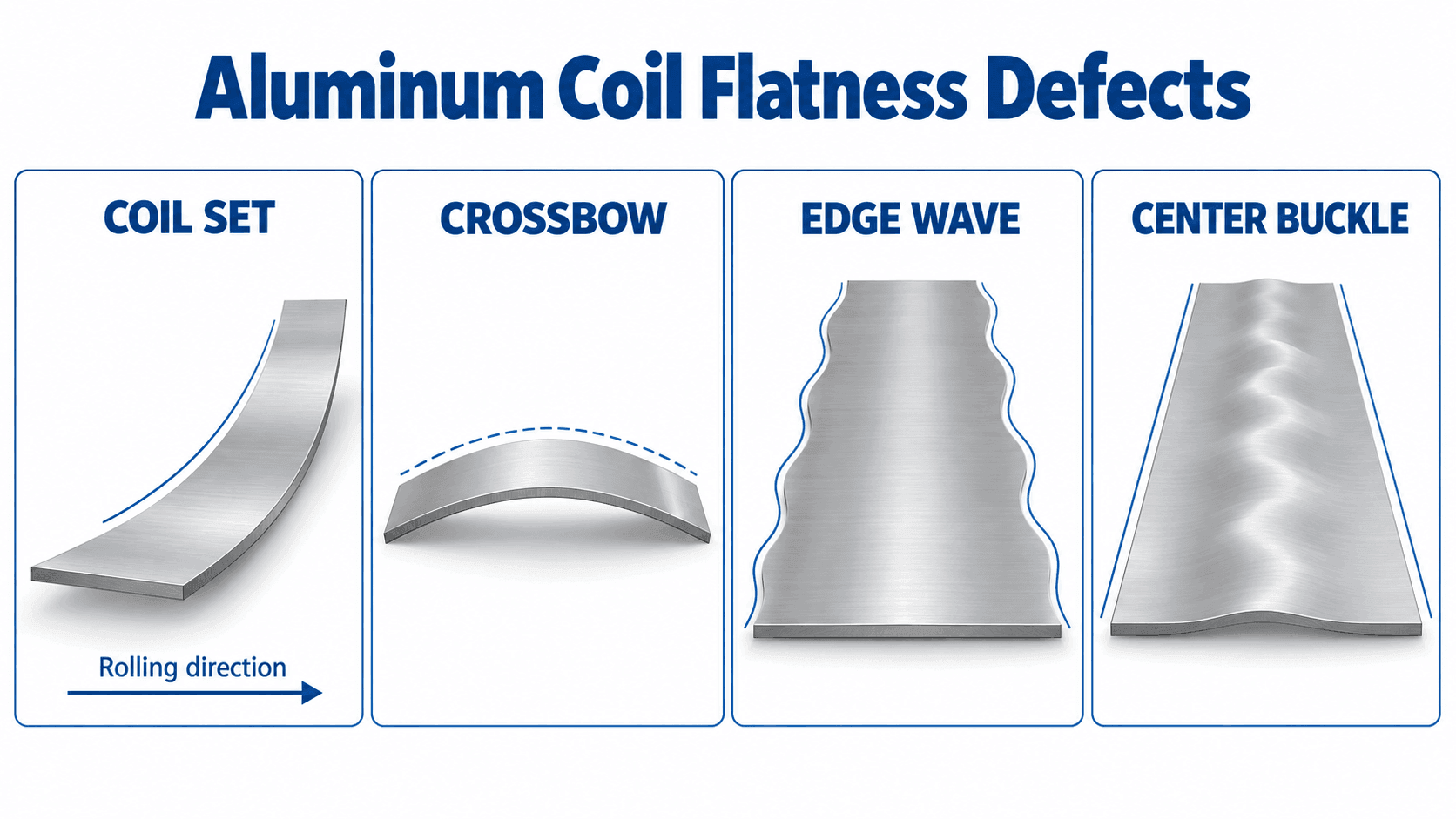
Flatness problems in aluminum coil are not all the same. A strip that curves in the rolling direction may have coil set; curvature across the width is usually described as crossbow; waves along the edges indicate edge wave; and waves concentrated near the center indicate center buckle. Correctl...Read more »
-
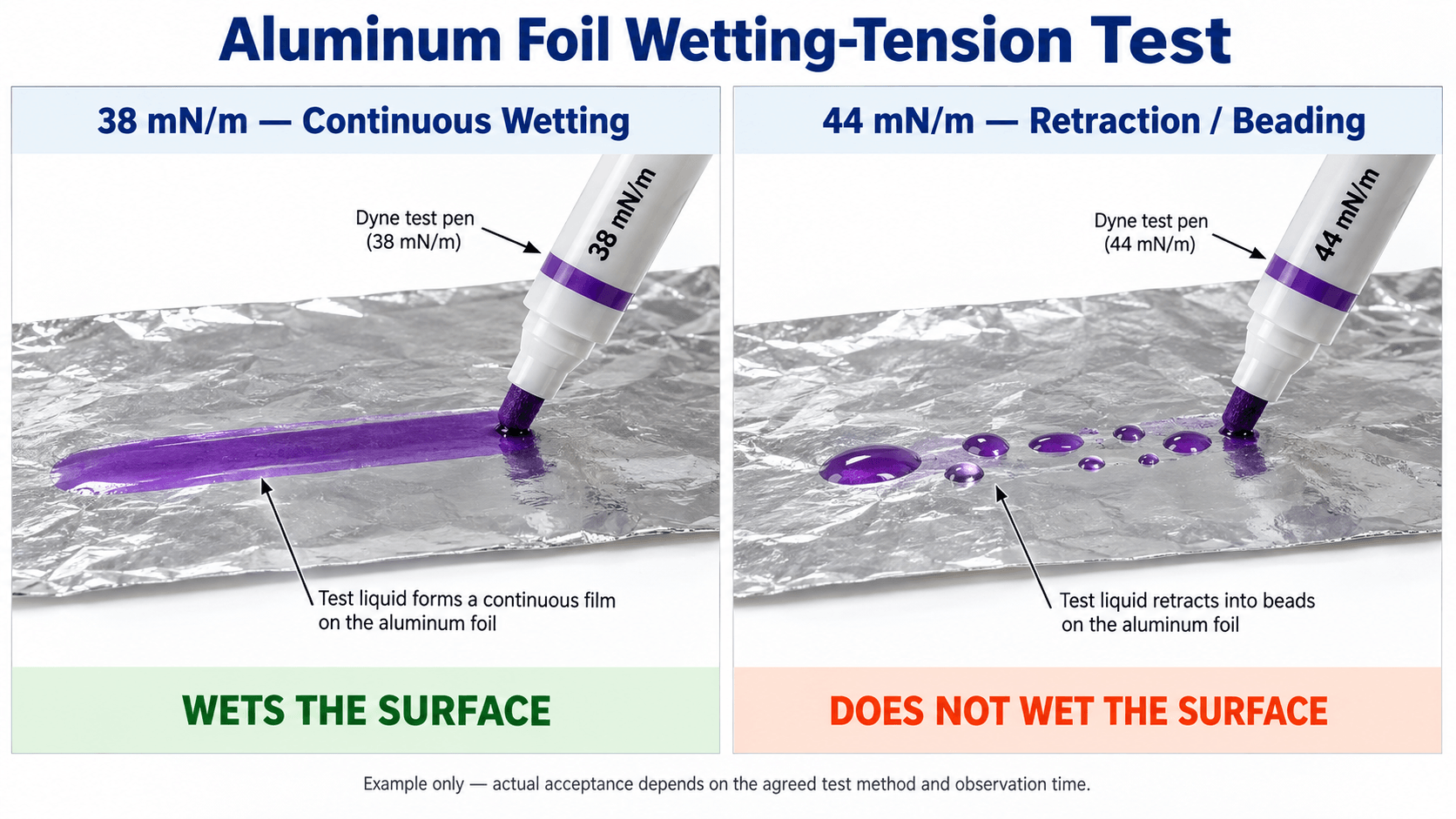
Aluminum Foil Dyne Level: How to Specify and Test Surface Wetting Tension Printing, coating or laminating aluminum foil requires more than the correct alloy, temper and thickness. The converting surface must also be clean and wettable enough for the intended ink, primer, lacquer or adhesive. Th...Read more »
-
Aluminum Coil ID, OD and Weight: How to Specify Coil Size for Your Production Line An aluminum coil can meet the required alloy, temper, thickness and width but still be unusable on the buyer’s equipment. The cause is often a mismatch in aluminum coil ID, OD or weight: the coil bore does ...Read more »
-
Aluminum Grain Direction: L, LT, ST, Rolling Direction and Bending Aluminum grain direction describes orientation relative to the principal rolling direction of wrought sheet or plate. The three common material directions are longitudinal (L), long transverse (LT) and short transverse (ST). Buye...Read more »