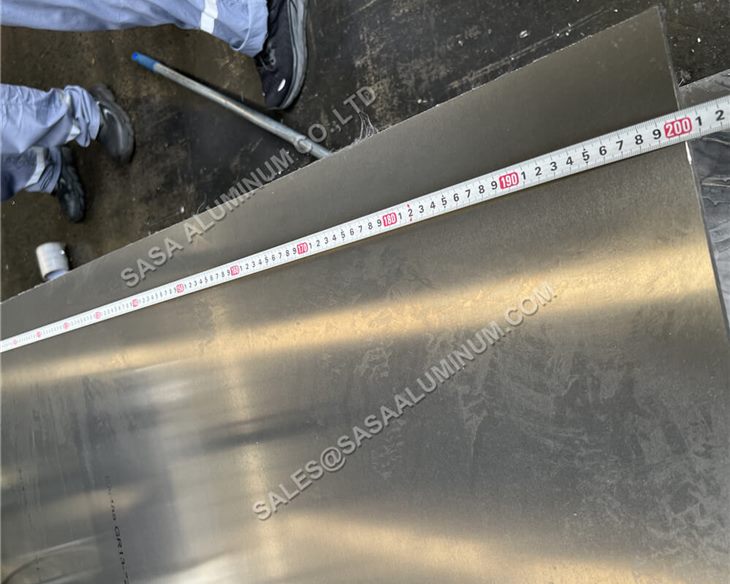
5083-H116 marine aluminum plate is widely evaluated for welded ship and offshore structures, but successful purchasing begins with the component drawing—not the alloy name alone. Thickness, plate size, rolling direction, temper, welding plan, tolerances and inspection documents all influence the material order and downstream fabrication.
Where 5083-H116 Plate Fits in Shipbuilding
5083 is a non-heat-treatable aluminum-magnesium alloy. In H116 temper it is ordered for marine-service plate applications that require controlled processing and specification-based corrosion performance. Typical design reviews may include hull plating, decks, superstructures, work boats, patrol vessels, offshore modules and coastal structures.
Application examples are not a blanket approval. Loads, fatigue, joint design, operating temperature, seawater exposure, galvanic contact and class requirements must be reviewed for the actual structure.
Start With Thickness and Plate Dimensions
Plate thickness affects structural calculations, forming force, weld procedure, heat input and inspection. The purchase order should state nominal thickness and the applicable tolerance standard. For cut-to-size plate, confirm whether the ordered width and length are final dimensions or include trimming and machining allowance.
| RFQ field | Why it matters |
|---|---|
| Thickness | Connects the drawing to tolerance, fabrication and test requirements |
| Width and length | Controls nesting yield, transport, handling and final fit-up |
| Rolling direction | May affect forming, testing orientation and part layout |
| Flatness | Influences cutting, panel alignment and welding distortion control |
| Edge condition | Defines mill edge, cut edge or preparation for downstream work |
Welding Considerations Before Ordering
The welding procedure should be qualified for the joint design, material thickness and governing construction standard. Filler selection, joint preparation, cleaning, shielding, heat input and distortion control belong to the fabrication plan. The heat-affected zone does not necessarily retain the same properties as the parent H116 plate.
Because of that difference, procurement and fabrication teams should coordinate early. If the drawing requires extra width for forming or trim after welding, it must be reflected in the ordered plate dimensions. Material substitutions or temper changes require engineering approval.
Surface, Cutting and Forming Requirements
State whether mill finish is acceptable and whether protective film is needed. Identify any restricted surface defects, grain-direction marking, bend direction or minimum bend-radius requirement from the approved drawing. Cutting methods and edge preparation should avoid contamination and excessive local damage.
Documentation for Shipbuilding Projects
- ASTM B928/B928M edition and any class or customer specification.
- Alloy 5083 and temper H116 clearly stated on the purchase order.
- Heat/lot traceability and plate marking requirements.
- Chemical, mechanical and corrosion-related test reports as applicable.
- MTC type, witness/hold points and third-party inspection.
- Packing list, package identification and export documents.
Packing and Logistics
Large marine plates require a packing plan that protects surfaces and edges while allowing safe lifting. Confirm maximum bundle weight, support spacing, moisture barrier, protective board, strapping and container restrictions. Plates should remain identifiable after packing so markings can be matched to the documentation.
Shipbuilding Plate RFQ Checklist
- Attach the drawing or provide thickness, width, length and quantity.
- State 5083-H116 and the required ASTM B928/B928M edition.
- List dimensional tolerances, flatness, surface and edge condition.
- Define testing, MTC, traceability and inspection requirements.
- Explain cutting, forming or welding allowances when relevant.
- Confirm packing, lifting, port and delivery documentation.
A complete request helps SASA ALUMINUM review the correct 5083-H116 marine aluminum plate supply route and identify technical questions before quotation.
FAQ
Can 5083-H116 plate be welded?
It is commonly considered for welded structures, but the actual welding procedure, filler, joint design and acceptance criteria must be qualified for the project.
Should a buyer specify ASTM B209 or ASTM B928?
For 5xxx-H116 marine-service material, ASTM B928/B928M should be reviewed because it addresses high-magnesium alloy products for marine and similar environments. The contractual standard and edition always govern.
Send SASA ALUMINUM the drawing, thickness, plate size, standard, temper, inspection and packing requirements.
Send Your Inquiry
Post time: Aug-10-2026