Introduction
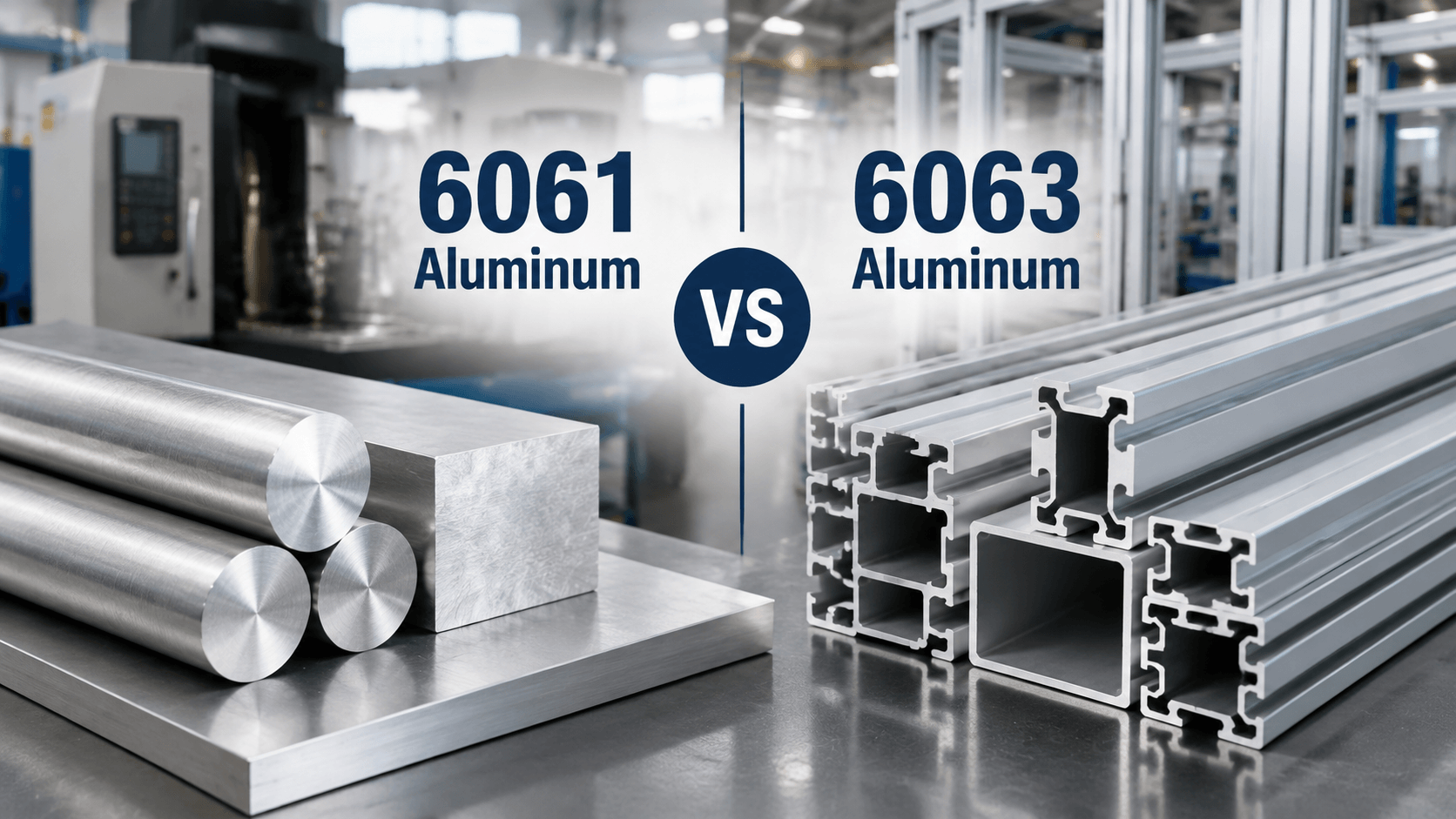
6061 aluminum and 6063 aluminum are two widely used aluminum alloys in industrial manufacturing, construction, extrusion and engineering applications. Although both alloys belong to the aluminum-magnesium-silicon alloy family, their different properties make them suitable for different applications.
6061 aluminum is generally selected when higher strength, structural performance and machining capability are required. 6063 aluminum is commonly preferred for extrusion profiles, architectural applications and projects where surface finish and formability are important.
Understanding the differences between 6061 and 6063 aluminum helps engineers and buyers select the correct material based on strength requirements, fabrication methods and final application.
Quick Answer: 6061 Aluminum vs 6063 Aluminum
- 6061 Aluminum:
Higher strength and better machinability, commonly used for structural components, machinery parts and demanding applications. - 6063 Aluminum:
Excellent extrusion performance and surface finish, commonly used for profiles, frames and architectural applications. - The better choice depends on whether the priority is strength, extrusion performance, appearance or fabrication requirements.
What Are 6061 and 6063 Aluminum?
Both 6061 and 6063 aluminum are heat-treatable aluminum alloys mainly containing magnesium and silicon. They offer good corrosion resistance, weldability and processing performance.
6061 Aluminum
6061 aluminum is one of the most commonly used high-strength aluminum alloys. It provides a good balance of mechanical strength, corrosion resistance, weldability and machinability.
Because of its higher strength compared with 6063, 6061 aluminum is often selected for structural components, transportation parts, machinery frames and engineered products.
- Higher mechanical strength
- Good machining performance
- Suitable for structural applications
- Available in various tempers such as T6
6063 Aluminum
6063 aluminum is widely recognized as an extrusion alloy because of its excellent extrusion characteristics and attractive surface finish.
It is commonly used for aluminum profiles, architectural frames, decorative structures and applications requiring complex shapes and smooth surfaces.
- Excellent extrusion performance
- Superior surface finish
- Good corrosion resistance
- Suitable for architectural profiles
Chemical Composition Difference Between 6061 and 6063 Aluminum
The main difference between 6061 and 6063 aluminum comes from alloy balance and design purpose. Both contain magnesium and silicon, but their compositions are optimized for different performance requirements.
| Element | 6061 Aluminum | 6063 Aluminum | Influence |
|---|---|---|---|
| Magnesium | Higher alloy level | Controlled alloy level | Contributes to strength improvement |
| Silicon | Higher alloy level | Controlled alloy level | Affects precipitation hardening and processing |
| Alloy Focus | Strength and structural performance | Extrusion and surface quality | Determines typical applications |
6061 vs 6063 Aluminum Strength Comparison
Strength is one of the most important factors when choosing between 6061 and 6063 aluminum. In general, 6061 aluminum provides higher mechanical strength, while 6063 aluminum provides better extrusion performance.
| Property | 6061 Aluminum | 6063 Aluminum |
|---|---|---|
| Tensile Strength | Generally higher | Generally lower |
| Yield Strength | Higher | Lower |
| Machining | Excellent | Moderate |
| Extrusion Performance | Good | Excellent |
Extrusion and Fabrication Performance Comparison
Although 6061 and 6063 aluminum belong to the same aluminum alloy family, their processing characteristics are different. The selection between them often depends on the manufacturing method and final product requirements.
6063 aluminum is especially popular for extrusion because it can produce complex profiles with smooth surfaces. 6061 aluminum provides better strength and machining performance, making it suitable for engineered components.
| Fabrication Method | 6061 Aluminum | 6063 Aluminum |
|---|---|---|
| Extrusion | Good extrusion performance | Excellent extrusion performance |
| Machining | Better machining capability | Suitable for lighter machining requirements |
| Welding | Good weldability | Good weldability |
| Surface Finish | Good | Excellent |
Application Comparison: 6061 vs 6063 Aluminum
The biggest difference between 6061 and 6063 aluminum applications comes from their balance between strength and extrusion performance.
6061 Aluminum Applications
6061 aluminum is commonly selected for applications where mechanical strength and structural reliability are important.
| Industry | Typical Applications |
|---|---|
| Aerospace | Structural components and lightweight parts |
| Machinery | Frames, machine parts and precision components |
| Marine | Structural components exposed to outdoor environments |
| Transportation | High-strength lightweight components |
6063 Aluminum Applications
6063 aluminum is widely used where profile appearance, extrusion efficiency and surface quality are important.
| Industry | Typical Applications |
|---|---|
| Architecture | Doors, windows and building profiles |
| Construction | Aluminum frames and decorative structures |
| Furniture | Lightweight frames and appearance-focused products |
| Industrial Profiles | Custom extrusion profiles |
How to Choose Between 6061 and 6063 Aluminum?
The correct aluminum alloy should be selected according to the application’s main requirements rather than simply choosing the stronger material.
| Requirement | Recommended Alloy |
|---|---|
| High structural strength | 6061 Aluminum |
| CNC machining components | 6061 Aluminum |
| Complex extrusion profiles | 6063 Aluminum |
| Architectural appearance | 6063 Aluminum |
| Smooth surface finish | 6063 Aluminum |
Procurement Considerations for Industrial Buyers
For industrial purchasing, alloy selection is only one part of the decision process. Buyers should also confirm temper condition, dimensions, standards and processing requirements.
- Confirm alloy grade: 6061 or 6063
- Specify temper condition such as T5 or T6
- Provide required dimensions and tolerances
- Confirm surface treatment requirements
- Specify inspection documents and certification needs
- Provide application information for proper alloy recommendation
Common Standards for 6061 and 6063 Aluminum
6061 and 6063 aluminum products are commonly supplied according to international standards that define chemical composition, mechanical properties, dimensions and manufacturing requirements.
| Standard | Description | Typical Application |
|---|---|---|
| ASTM B209 | Aluminum and aluminum alloy sheet and plate | Aluminum plates and sheets |
| ASTM B221 | Aluminum and aluminum alloy extruded bars, rods, wires, profiles and tubes | 6061 and 6063 extrusion products |
| ASTM B211 | Aluminum alloy bars, rods and wires | Industrial aluminum bar applications |
| EN 755 | Aluminum extrusion products and dimensional requirements | Industrial and architectural profiles |
FAQ
Is 6061 aluminum stronger than 6063 aluminum?
Yes. 6061 aluminum generally provides higher tensile strength and yield strength than 6063 aluminum. However, 6063 aluminum offers better extrusion performance and surface finish.
Which aluminum is better for extrusion, 6061 or 6063?
6063 aluminum is usually preferred for extrusion because it has excellent extrusion characteristics and can achieve smooth surfaces and complex profile shapes.
Is 6061 aluminum good for structural applications?
Yes. 6061 aluminum is widely used for structural applications because of its higher strength, good corrosion resistance and reliable machining performance.
Is 6063 aluminum suitable for outdoor use?
Yes. 6063 aluminum has good corrosion resistance and is commonly used for outdoor architectural profiles, frames and construction applications.
Can 6061 and 6063 aluminum be welded?
Both alloys can be welded using suitable welding processes. Welding performance may vary depending on temper condition and fabrication requirements.
Does temper condition affect 6061 and 6063 aluminum properties?
Yes. Temper conditions such as T5 and T6 significantly influence mechanical properties. Buyers should specify the required temper according to application requirements.
Related Aluminum Products
6061 and 6063 aluminum are available in different product forms depending on application requirements.
- 6061 Aluminum Plate
- 6061 Aluminum Bar
- 6061 Aluminum Extrusion Profiles
- 6063 Aluminum Extrusion Profiles
- 6063 Aluminum Architectural Profiles
- Customized Aluminum Components
When requesting aluminum products, buyers should provide alloy grade, temper condition, dimensions, quantity, surface requirements and application information.
Conclusion
6061 aluminum and 6063 aluminum are both important aluminum alloys, but they are designed for different performance requirements.
6061 aluminum is generally the better choice when higher strength, machining capability and structural performance are required. 6063 aluminum is usually preferred for extrusion profiles, architectural applications and projects where surface finish is important.
The correct aluminum alloy should be selected according to application requirements, manufacturing process, mechanical performance and service environment rather than strength alone.
Post time: Jul-30-2026