Introduction
Aluminum alloy temper is an important designation that describes the heat treatment and mechanical condition of aluminum products. The temper condition affects strength, hardness, formability and application performance.
Unlike aluminum alloy grades that define chemical composition, temper designations describe how the material has been processed after manufacturing, including heat treatment, cold working and aging processes.
Understanding aluminum temper is essential for industrial buyers because the same alloy, such as 6061 aluminum, can have significantly different properties depending on its temper condition.
Quick Answer: What Does Aluminum Temper Mean?
- Aluminum temper indicates the processing condition of an aluminum alloy.
- “T” tempers usually refer to heat-treated aluminum alloys.
- “O” temper indicates annealed aluminum with improved formability.
- T6 generally provides higher strength through solution heat treatment and aging.
What Is Aluminum Alloy Temper?
Aluminum temper refers to the condition of an aluminum alloy after specific manufacturing processes. These processes modify the internal structure of the material and determine its final mechanical properties.
For example, 6061-T6 aluminum and 6061-O aluminum have the same alloy composition but different strength and forming characteristics because their temper conditions are different.
Why Temper Matters in Aluminum Selection
- Determines mechanical strength.
- Influences hardness and wear resistance.
- Affects machining and forming performance.
- Impacts suitability for specific applications.
Aluminum Temper Designation System
Aluminum temper designations use letters and numbers to identify the processing condition of the material. The designation is added after the alloy number.
Example:
6061-T6 Aluminum
6061 = Aluminum alloy grade
T6 = Heat treatment temper condition
| Temper Symbol | Meaning |
|---|---|
| O | Annealed condition with maximum formability |
| H | Strain hardened condition, commonly used for non-heat-treatable alloys |
| T | Heat-treated condition for increased strength |
Common Aluminum Tempers
Different aluminum tempers are selected according to required strength, fabrication method and application environment.
| Temper | Characteristics | Typical Use |
|---|---|---|
| O | Soft condition, excellent formability | Deep drawing and forming |
| T4 | Solution heat treated and naturally aged | Forming before final aging |
| T5 | Artificially aged after extrusion | Aluminum profiles |
| T6 | Solution heat treated and artificially aged | Structural components |
T5 vs T6 Aluminum Temper Comparison
T5 and T6 are two of the most commonly used aluminum tempers in industrial applications. Although both provide improved strength compared with untreated aluminum, their manufacturing processes and performance characteristics are different.
| Property | T5 Aluminum | T6 Aluminum |
|---|---|---|
| Heat Treatment Process | Artificial aging after extrusion or forming | Solution heat treatment followed by artificial aging |
| Strength Level | Medium to high strength | Higher strength compared with T5 in many alloys |
| Formability | Better after extrusion | Lower formability due to higher hardness |
| Typical Application | Aluminum profiles, frames and architectural applications | Structural parts, machinery and load-bearing components |
Which Is Better: T5 or T6 Aluminum?
Neither T5 nor T6 aluminum is universally better. T6 is generally selected when higher mechanical strength is required, while T5 is often preferred when extrusion performance, dimensional stability and cost efficiency are important.
The correct temper depends on the alloy grade, product design, manufacturing process and final application requirements.
6061-T6 Aluminum vs 6063-T5 Aluminum
6061-T6 and 6063-T5 are two widely used aluminum products. They have similar corrosion resistance but different mechanical properties and application advantages.
| Comparison | 6061-T6 Aluminum | 6063-T5 Aluminum |
|---|---|---|
| Main Advantage | Higher strength and structural performance | Better extrusion performance and surface finish |
| Strength | Higher | Moderate |
| Machining | Excellent machinability | More suitable for extrusion applications |
| Common Applications | Aerospace parts, machinery, structural components | Window frames, architectural profiles, decorative structures |
Aluminum Heat Treatment Process
Heat treatment is an important process used to improve the mechanical properties of heat-treatable aluminum alloys. It changes the internal structure of the alloy and increases strength through controlled heating and aging.
| Process Stage | Purpose |
|---|---|
| Solution Heat Treatment | Dissolves alloying elements into solid solution |
| Quenching | Rapid cooling to retain the solution structure |
| Aging | Improves strength through precipitation hardening |
How Industrial Buyers Select Aluminum Temper
The correct aluminum temper should be selected based on mechanical requirements, fabrication method and service environment.
| Requirement | Recommended Temper |
|---|---|
| Maximum Strength | T6 |
| Better Formability | O or T4 |
| Extruded Profiles | T5 |
| Structural Components | T6 |
Aluminum Temper Standards
Aluminum alloy temper designations are defined by international standards to ensure consistent material performance and classification. The applicable standard depends on alloy type, product form and industry requirements.
| Standard | Description |
|---|---|
| ASTM B209 | Standard specification for aluminum and aluminum-alloy sheet and plate |
| ASTM B221 | Standard specification for aluminum and aluminum-alloy extruded bars, rods, profiles and tubes |
| EN 515 | European standard for aluminum and aluminum alloy temper designations |
| AA Aluminum Association System | Common international designation system for aluminum alloys and tempers |
Aluminum Temper Applications
Different aluminum tempers are selected according to strength requirements, manufacturing methods and service conditions. The same aluminum alloy may be used for different industries depending on the temper condition.
| Temper | Common Applications |
|---|---|
| O Temper | Deep drawing, forming parts, cookware and applications requiring high ductility |
| T4 Temper | Components requiring moderate strength and additional forming operations |
| T5 Temper | Extruded profiles, architectural systems and industrial frames |
| T6 Temper | Structural components, machinery parts, transportation and aerospace applications |
Aluminum Temper Selection Guide for Buyers
Industrial buyers should consider alloy grade and temper together. The alloy determines corrosion resistance and basic characteristics, while the temper determines strength, hardness and fabrication performance.
| Application Requirement | Recommended Choice |
|---|---|
| High Load Structural Components | 6061-T6 Aluminum |
| Extruded Aluminum Profiles | 6063-T5 Aluminum |
| Complex Forming Requirements | O or T4 Temper |
| Machined Components | T6 Temper Aluminum Alloys |
FAQ
What does T6 mean in aluminum?
T6 means the aluminum alloy has been solution heat treated and artificially aged to achieve increased strength and hardness. It is one of the most commonly used aluminum tempers for structural applications.
What is the difference between T5 and T6 aluminum?
T5 aluminum is artificially aged after extrusion, while T6 aluminum is solution heat treated and artificially aged. T6 generally provides higher strength, while T5 often offers advantages in extrusion applications.
Is 6061 aluminum always T6?
No. 6061 aluminum can be supplied in different tempers including O, T4 and T6. The temper condition determines its final mechanical properties.
Which aluminum temper has the highest strength?
Among commonly used aluminum tempers, T6 generally provides high strength for heat-treatable alloys. However, the actual performance depends on the alloy grade and heat treatment condition.
Can aluminum temper be customized?
Yes. Aluminum products can be supplied in different temper conditions according to alloy type, processing requirements and customer specifications.
Aluminum Alloy Products from SASA Aluminum
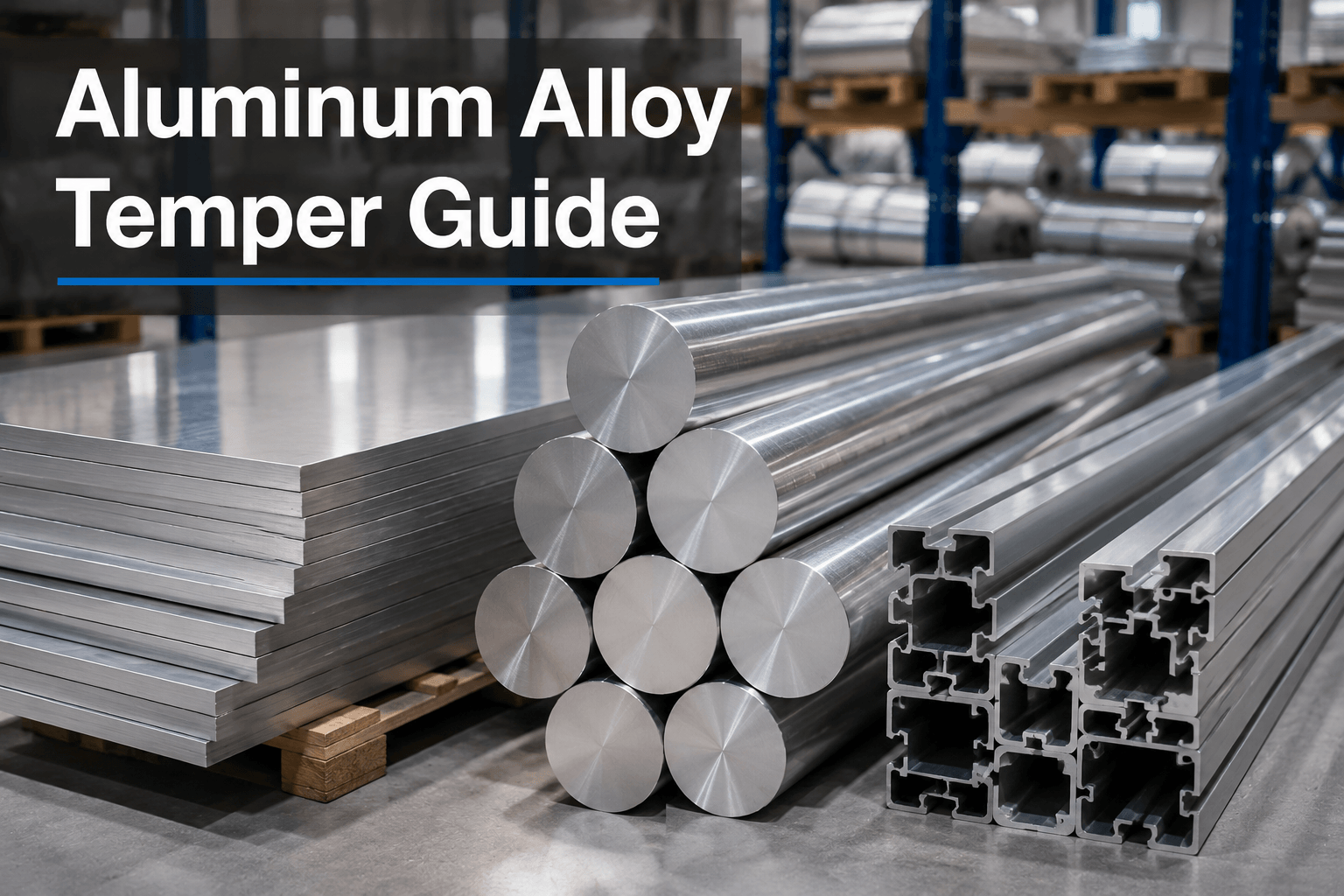
SASA Aluminum supplies aluminum plates, sheets, bars, profiles and customized aluminum products in various alloy grades and temper conditions.
Available tempers include common conditions such as O, T4, T5 and T6 depending on alloy grade and product requirements.
Products can be supplied with customized dimensions, surface treatment, cutting service and material documentation.
For aluminum alloy requirements, please provide alloy grade, temper condition, product size, quantity and application information.
Conclusion
Aluminum alloy temper is a key factor that determines material performance after processing. Understanding the difference between O, T4, T5 and T6 tempers helps buyers select the right aluminum material for their projects.
While T6 aluminum is widely selected for strength-critical applications, T5 aluminum remains an excellent choice for extruded profiles and architectural products. The best temper depends on the balance between strength, formability and manufacturing requirements.
By selecting the correct alloy and temper combination, industrial users can achieve reliable performance, efficient fabrication and long-term service life.
Post time: Jul-27-2026