Introduction
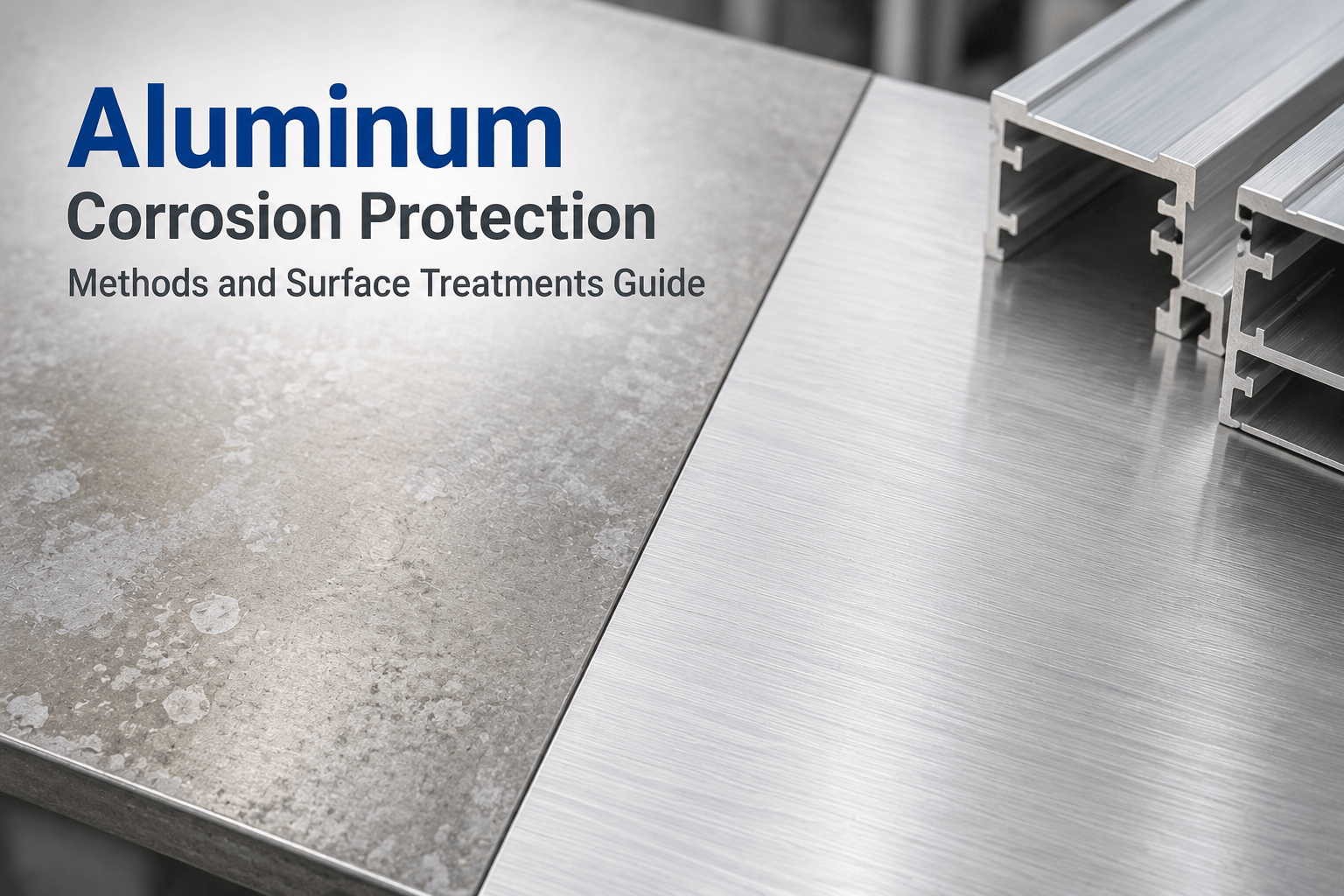
Aluminum has excellent natural corrosion resistance because it forms a thin aluminum oxide layer on its surface. However, industrial environments, marine exposure and chemical conditions may damage this protective layer and require additional surface treatments.
Aluminum corrosion protection methods are designed to improve corrosion resistance, surface durability, appearance and service life. Common solutions include anodizing, powder coating, electrophoresis coating, chemical conversion coating and painting.
Selecting the correct aluminum surface treatment depends on the operating environment, appearance requirements, mechanical conditions and expected service life.
Quick Answer: How to Protect Aluminum from Corrosion?
- Anodizing: Best for improving natural oxide protection and maintaining metallic appearance.
- Powder Coating: Best for decorative applications requiring color options and weather resistance.
- Electrophoresis Coating: Best for uniform coating thickness and high-quality appearance.
- Chemical Conversion Coating: Best as a protective base layer before painting.
Why Does Aluminum Corrode?
Unlike iron, aluminum does not form traditional rust. Instead, aluminum reacts with oxygen and naturally creates a thin aluminum oxide layer that protects the underlying metal.
Under normal conditions, this oxide film provides effective corrosion resistance. However, certain environments can damage or penetrate this protective layer.
| Corrosion Factor | Effect on Aluminum |
|---|---|
| Chloride Ions | May cause localized corrosion and pitting, especially in marine environments. |
| Acidic Environment | Can dissolve the protective oxide layer. |
| Alkaline Environment | May accelerate aluminum surface degradation. |
| Galvanic Corrosion | Occurs when aluminum contacts dissimilar metals in the presence of an electrolyte. |
Common Aluminum Corrosion Protection Methods
Different surface treatments provide different levels of corrosion protection and surface performance. The most suitable method depends on application requirements.
1. Aluminum Anodizing
Anodizing is an electrochemical surface treatment that increases the thickness of the natural aluminum oxide layer.
Unlike paint coatings, anodizing becomes part of the aluminum surface, providing durable protection while maintaining the metallic appearance of the material.
| Advantage | Description |
|---|---|
| Corrosion Resistance | Creates a thicker oxide layer for improved protection. |
| Surface Appearance | Maintains aluminum’s natural metallic appearance. |
| Durability | Provides long-term outdoor performance. |
2. Powder Coating
Powder coating applies a dry polymer powder onto the aluminum surface, which is then cured to form a protective coating.
It provides excellent appearance flexibility because it can be produced in many colors and finishes.
| Feature | Benefit |
|---|---|
| Color Options | Available in various colors and decorative finishes. |
| Weather Resistance | Suitable for outdoor architectural applications. |
3. Aluminum Electrophoresis Coating
Electrophoresis coating, also called e-coating, is a surface treatment process that uses an electrical field to deposit a protective coating onto the aluminum surface.
This process creates a uniform coating layer, including coverage on complex shapes and edges where traditional coating methods may have difficulty achieving consistent thickness.
| Feature | Description |
|---|---|
| Uniform Coating | Provides consistent coating thickness across complex surfaces. |
| Corrosion Protection | Improves resistance against moisture and environmental exposure. |
| Appearance | Provides a smooth and consistent surface finish. |
4. Chemical Conversion Coating
Chemical conversion coating is a surface treatment that chemically reacts with the aluminum surface to create a protective conversion layer.
This treatment is commonly used as a preparation step before painting or powder coating because it improves coating adhesion and provides additional corrosion protection.
| Purpose | Benefit |
|---|---|
| Surface Preparation | Improves adhesion of subsequent coatings. |
| Corrosion Protection | Provides additional protection against environmental exposure. |
| Industrial Applications | Commonly used for aerospace and industrial aluminum components. |
5. Aluminum Painting
Painting is one of the most flexible aluminum protection methods. It creates a physical barrier between aluminum and the external environment.
The long-term performance of painted aluminum depends on surface preparation, coating quality, application method and service environment.
| Advantage | Consideration |
|---|---|
| Flexible Appearance | Available in many colors and finishes. |
| Large Structure Application | Suitable for large aluminum structures. |
| Maintenance Requirement | Coating condition should be inspected during service. |
Aluminum Surface Treatment Comparison
Different aluminum surface treatments provide different levels of corrosion resistance, appearance and durability. The following comparison helps select the appropriate method for different applications.
| Treatment Method | Corrosion Resistance | Appearance | Typical Applications |
|---|---|---|---|
| Anodizing | Excellent | Metallic finish | Architecture, aerospace, electronics |
| Powder Coating | Very Good | Multiple colors available | Building products, windows, doors |
| Electrophoresis Coating | Excellent | Smooth and uniform | Automotive and precision components |
| Chemical Conversion Coating | Good | Usually used as base layer | Industrial coating preparation |
| Painting | Depends on coating system | Flexible design options | Large structures and repair applications |
How to Choose the Right Aluminum Surface Treatment?
The best aluminum corrosion protection method depends on the environment, service requirements and appearance expectations.
| Requirement | Recommended Treatment |
|---|---|
| Outdoor exposure and long service life | Anodizing or powder coating |
| Decorative colors | Powder coating |
| High-quality uniform coating | Electrophoresis coating |
| Before painting | Chemical conversion coating |
Applications of Aluminum Surface Treatments
Aluminum surface treatments are widely used in industries where corrosion resistance, durability and appearance are important. The appropriate treatment depends on the operating environment and performance requirements.
| Industry | Recommended Treatment | Reason |
|---|---|---|
| Architecture and Building | Anodizing / Powder Coating | Provides weather resistance and decorative appearance |
| Aerospace Components | Anodizing / Conversion Coating | Improves corrosion protection while maintaining lightweight properties |
| Automotive Components | Electrophoresis / Powder Coating | Provides uniform coating and long-term durability |
| Marine Equipment | Anodizing / Protective Coating | Improves resistance to moisture and salt exposure |
| Industrial Equipment | Conversion Coating / Painting | Provides protection and improves coating adhesion |
FAQ
Does aluminum rust like steel?
No. Aluminum does not form iron rust like steel. Instead, aluminum develops a natural oxide layer that protects the surface. However, this layer can be damaged in aggressive environments, causing corrosion.
What is the best corrosion protection method for aluminum?
There is no single best method for all applications. Anodizing is commonly selected for durable oxide protection, while powder coating is often preferred when decorative appearance and weather resistance are required.
Is anodized aluminum better than powder coated aluminum?
Anodized aluminum provides an integrated oxide layer with excellent durability, while powder coating provides more color choices and a thicker protective coating. The better option depends on the application requirements.
Can aluminum be used in marine environments?
Yes. Aluminum can be used in marine environments when the correct alloy and surface treatment are selected. Protective treatments help reduce corrosion caused by salt water exposure.
How long does anodized aluminum last?
The service life of anodized aluminum depends on anodizing thickness, environmental exposure and maintenance conditions. Properly treated anodized aluminum can provide long-term outdoor performance.
Aluminum Products and Surface Treatment Services from SASA ALUMINUM
SASA ALUMINUM supplies aluminum products with customized surface treatment options for industrial, architectural and engineering applications.
Available aluminum products include:
- Aluminum Plate and Sheet
- Aluminum Bar and Rod
- Aluminum Tube and Pipe
- Aluminum Profiles
- Customized Aluminum Components
Surface treatment options include anodizing, powder coating, conversion coating and other customized finishing solutions according to project requirements.
For quotation requests, please provide:
- Aluminum alloy grade
- Product dimensions
- Required surface treatment
- Quantity
- Application environment
Conclusion
Aluminum naturally provides corrosion resistance through its oxide layer, but additional surface treatments are often required for demanding industrial environments.
Anodizing, powder coating, electrophoresis coating and chemical conversion coating each provide different advantages. Selecting the correct aluminum surface treatment requires considering corrosion exposure, appearance requirements, service conditions and expected performance.
By choosing the appropriate alloy and surface protection method, aluminum products can achieve longer service life and reliable performance in a wide range of applications.
Post time: Jul-29-2026