Introduction
Aluminum has excellent corrosion resistance due to its natural oxide film, but additional surface treatments are often required to improve durability, appearance and performance in demanding industrial environments.
Selecting the right aluminum corrosion protection method depends on application conditions, exposure environment, required service life and surface performance requirements.
Common aluminum protection methods include anodizing, powder coating, painting, conversion coating and mechanical surface finishing. Each method provides different advantages depending on whether the priority is corrosion resistance, appearance, wear resistance or manufacturing requirements.
Quick Answer: How Is Aluminum Protected Against Corrosion?
- Aluminum naturally forms a protective oxide layer that slows further corrosion.
- Anodizing improves oxide layer thickness and surface durability.
- Coatings such as powder coating provide additional environmental protection.
- The best protection method depends on the application environment and performance requirements.
Why Does Aluminum Resist Corrosion?
Aluminum has good corrosion resistance because it quickly reacts with oxygen in the environment to form a thin aluminum oxide film on its surface.
This oxide layer is tightly bonded to the aluminum substrate and acts as a protective barrier, reducing further oxidation under normal atmospheric conditions.
However, certain environments can damage or exceed the protection capability of the natural oxide film, including marine atmospheres, industrial chemicals, acidic or alkaline conditions and continuous moisture exposure.
Factors That Influence Aluminum Corrosion
| Factor | Effect on Aluminum |
|---|---|
| Salt Water and Chlorides | May cause localized corrosion such as pitting |
| Industrial Pollution | Chemical exposure may affect surface protection |
| Temperature and Humidity | Accelerates environmental reactions |
| Mechanical Damage | May expose fresh aluminum surface |
Common Aluminum Corrosion Protection Methods
Different surface treatment methods are used to improve aluminum performance. The selection depends on environmental exposure, appearance requirements and final application.
| Protection Method | Main Function |
|---|---|
| Anodizing | Creates a thicker and more durable oxide layer |
| Powder Coating | Provides decorative finish and additional barrier protection |
| Conversion Coating | Improves coating adhesion and corrosion resistance |
| Painting | Provides customized appearance and environmental protection |
| Mechanical Finishing | Improves appearance and surface condition |
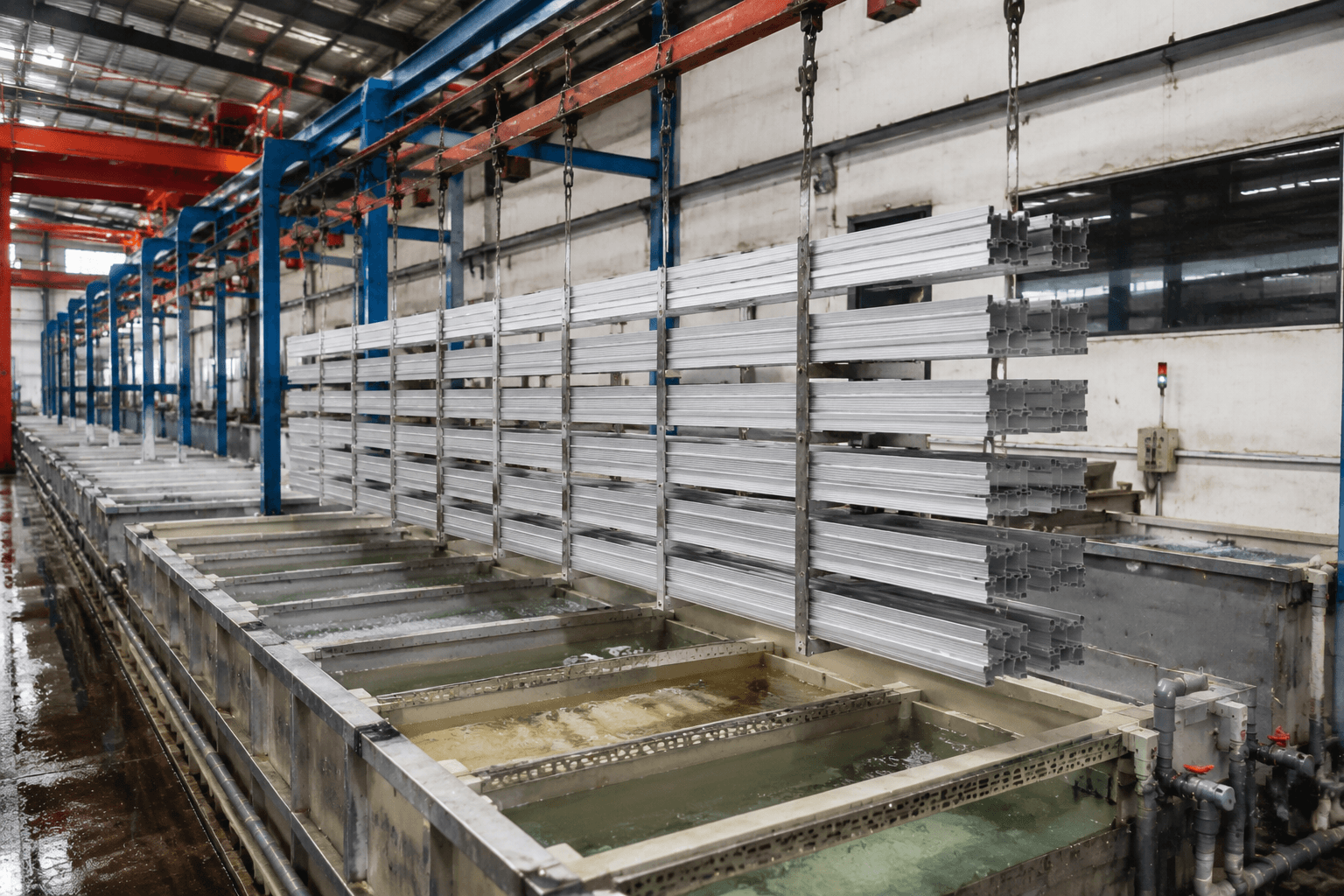
Anodizing: One of the Most Common Aluminum Surface Treatments
Anodizing is an electrochemical process that increases the thickness of the natural aluminum oxide layer. Unlike paint or coating systems, the anodized layer becomes part of the aluminum surface.
This treatment improves corrosion resistance, surface hardness and appearance, making anodized aluminum widely used in architecture, transportation, electronics and industrial components.
Advantages of Aluminum Anodizing
- Improved corrosion resistance.
- Better surface hardness and wear resistance.
- Stable appearance with various finishing options.
- Good adhesion for subsequent coating processes.
Powder Coating and Painting for Aluminum Protection
Powder coating and painting are widely used aluminum surface protection methods, especially when both corrosion resistance and decorative appearance are required.
Unlike anodizing, which modifies the aluminum oxide layer itself, coating methods create an additional protective barrier between aluminum and the external environment.
Powder Coating
Powder coating uses electrostatic application to deposit dry powder onto the aluminum surface, followed by heat curing to form a continuous protective layer.
It is commonly used for architectural aluminum profiles, building components and outdoor structures because it provides a wide range of colors and good weather resistance.
| Advantages | Considerations |
|---|---|
| Provides decorative appearance | Coating damage may expose the aluminum substrate |
| Good resistance to weather exposure | Surface preparation is important for adhesion |
| Available in many colors and textures | Performance depends on coating quality and environment |
Aluminum Painting
Painting is another surface protection method used for aluminum components. Proper surface preparation, including cleaning and conversion treatment, is important to achieve good coating adhesion.
Paint systems are commonly selected for industrial equipment, transportation components and applications requiring specific colors or protective coatings.
Conversion Coating for Aluminum
Conversion coating is a chemical surface treatment that improves corrosion resistance and provides a better surface for paint or coating adhesion.
This treatment is often used before painting because it helps create a stable interface between the aluminum surface and the protective coating system.
Common Benefits of Conversion Coating
- Improves corrosion resistance.
- Enhances coating adhesion.
- Provides additional surface protection.
- Supports consistent coating performance.
Comparison of Aluminum Surface Treatment Methods
| Treatment | Corrosion Protection | Typical Applications |
|---|---|---|
| Anodizing | Excellent for many outdoor applications | Architecture, transportation, electronics |
| Powder Coating | Good barrier protection | Building materials, decorative structures |
| Painting | Depends on coating system | Industrial equipment and customized applications |
| Conversion Coating | Improves surface protection and coating adhesion | Pre-treatment before painting |
| Mechanical Finishing | Limited corrosion improvement alone | Appearance improvement and surface preparation |
Effect of Aluminum Alloy Selection on Corrosion Resistance
The corrosion resistance of aluminum is influenced not only by surface treatment but also by alloy composition. Different aluminum alloys are developed to provide different balances of strength, formability and corrosion performance.
| Alloy | Corrosion Characteristics | Common Uses |
|---|---|---|
| 1050 Aluminum | Excellent corrosion resistance due to high aluminum purity | Decorative panels, electrical applications |
| 5052 Aluminum | Good resistance, especially in marine environments | Marine equipment, tanks, transportation |
| 6061 Aluminum | Good general corrosion resistance with higher strength | Structural components and machinery parts |
How to Select the Right Aluminum Surface Treatment
The most suitable aluminum corrosion protection method depends on the working environment, appearance requirements, service life expectations and manufacturing process.
| Application Requirement | Recommended Treatment | Reason |
|---|---|---|
| Outdoor architectural applications | Anodizing or powder coating | Provides weather resistance and attractive appearance |
| Marine environments | Anodizing with proper alloy selection | Improves resistance against salt-containing environments |
| Industrial equipment | Conversion coating + painting | Improves coating adhesion and corrosion protection |
| Decorative components | Anodizing or powder coating | Provides stable appearance and surface protection |
Applications of Aluminum Surface Treatments
Aluminum surface treatments are widely used across industries where lightweight properties, corrosion resistance and surface appearance are required.
| Industry | Typical Applications |
|---|---|
| Construction and Architecture | Curtain walls, doors, windows, decorative panels and building profiles |
| Transportation | Automotive parts, railway components and lightweight structures |
| Marine Engineering | Boat structures and components exposed to moisture environments |
| Electronics | Housings, heat sinks and precision components |
| Industrial Equipment | Machine covers, frames and fabricated components |
Aluminum Surface Treatment Standards
Industrial aluminum surface treatments are commonly performed according to international standards that define coating performance, surface preparation and quality requirements.
| Standard | Application |
|---|---|
| ASTM B580 | Standard specification for anodic oxide coatings on aluminum |
| AAMA 2603 / 2604 / 2605 | Performance requirements for organic coatings on architectural aluminum |
| ISO 7599 | Anodizing of aluminum and evaluation of anodic oxide coatings |
FAQ
Does aluminum need corrosion protection?
Aluminum naturally forms a protective oxide layer, but additional surface treatments may be required for harsh environments, improved appearance or extended service life.
What is the best surface treatment for aluminum?
The best treatment depends on the application. Anodizing is commonly selected for durability, while powder coating is often chosen when color and decorative appearance are important.
Is anodized aluminum better than painted aluminum?
Anodized aluminum provides an oxide layer integrated with the aluminum surface, while painted aluminum relies on an external coating. The better choice depends on environmental conditions and appearance requirements.
Which aluminum alloys have good corrosion resistance?
Pure aluminum grades such as 1050 and alloys such as 5052 generally provide good corrosion resistance. Alloy selection should consider both corrosion requirements and mechanical performance.
Can aluminum surface treatments improve service life?
Yes. Proper surface treatments can reduce environmental damage, improve corrosion resistance and extend the service life of aluminum components.
Aluminum Material Solutions from SASA ALUMINUM
SASA ALUMINUM supplies aluminum sheets, plates and customized aluminum products for industrial and architectural applications.
Available materials include different aluminum alloys, thicknesses and surface conditions according to project requirements.
Material documentation, customized processing and quality inspection support can be provided for industrial applications.
For aluminum material requirements, please provide alloy grade, dimensions, quantity and application environment.
Conclusion
Aluminum provides excellent natural corrosion resistance, but surface treatments can further improve durability, appearance and performance in demanding applications.
Choosing the correct protection method requires consideration of alloy type, environmental exposure, required service life and final application requirements.
From anodizing and powder coating to conversion treatments, aluminum surface technologies provide flexible solutions for construction, transportation, marine and industrial applications.
Post time: Jul-24-2026