Introduction
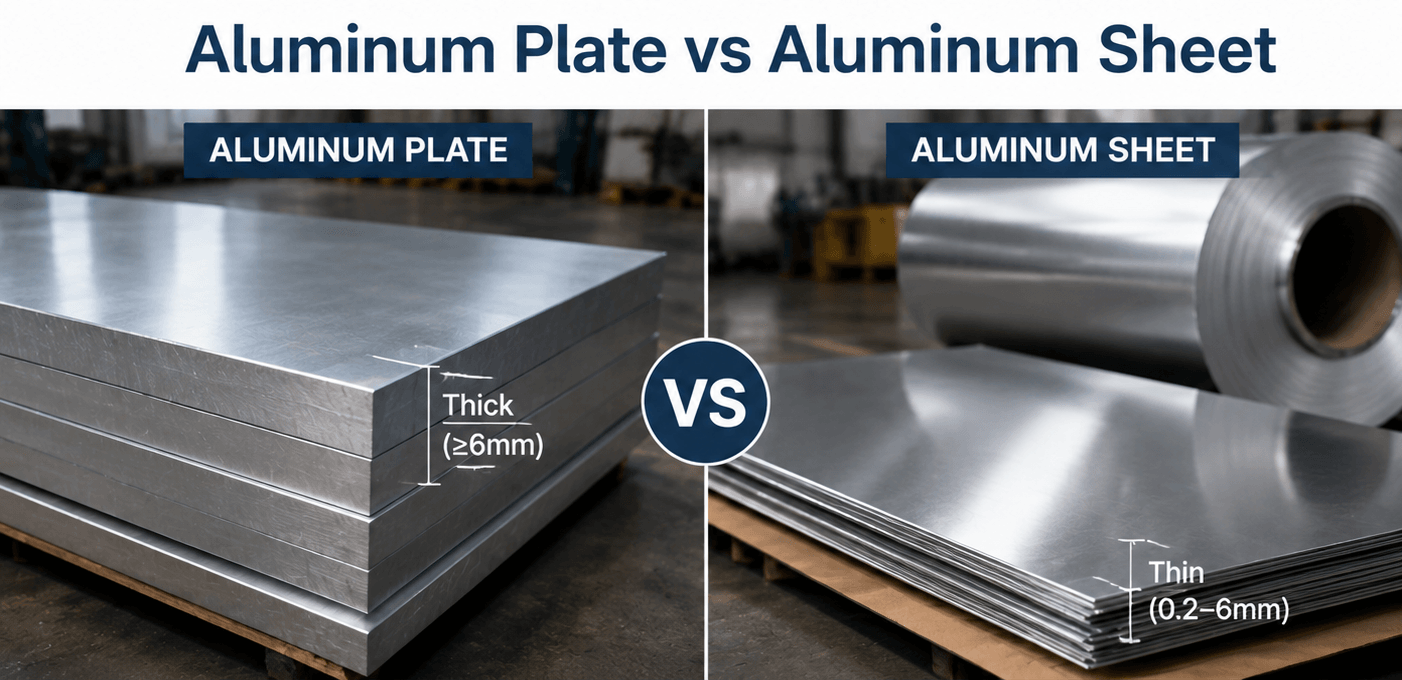
Aluminum plate and aluminum sheet are both widely used aluminum products, but they are selected for different engineering requirements. The main differences are thickness range, structural performance, fabrication methods and typical applications.
In general, aluminum plate refers to thicker aluminum products used for structural and load-bearing applications, while aluminum sheet refers to thinner aluminum products commonly used for forming, panels and general fabrication.
Selecting the correct aluminum product depends on thickness requirements, alloy properties, mechanical strength, corrosion resistance and application environment.
Quick Answer: Aluminum Plate vs Aluminum Sheet
- Aluminum plate is thicker and commonly used for structural applications.
- Aluminum sheet is thinner and easier to form, bend and fabricate.
- Plate is preferred for machinery, transportation and heavy-duty components.
- Sheet is commonly used for panels, covers, roofing and lightweight structures.
What Is Aluminum Sheet?
Aluminum sheet is a flat aluminum product manufactured by rolling aluminum alloy into relatively thin thicknesses. It provides good formability, corrosion resistance and surface quality.
Aluminum sheets are widely used where lightweight performance, easy fabrication and appearance are important considerations.
Characteristics of Aluminum Sheet
- Lower thickness compared with aluminum plate.
- Excellent formability and bending performance.
- Suitable for stamping and fabrication processes.
- Available in various alloys and surface finishes.
What Is Aluminum Plate?
Aluminum plate is a thicker aluminum product designed for applications requiring higher stiffness, strength and dimensional stability.
Because of its greater thickness, aluminum plate is commonly selected for structural components, transportation equipment, marine applications and industrial machinery.
Characteristics of Aluminum Plate
- Higher thickness and rigidity.
- Better load-bearing capability.
- Suitable for machining and structural fabrication.
- Provides excellent strength-to-weight performance.
Aluminum Plate vs Aluminum Sheet Thickness Comparison
Thickness is one of the main factors that distinguishes aluminum plate from aluminum sheet. Industry definitions may vary slightly depending on region and standards, but thickness is generally used as the primary classification factor.
| Product | Typical Thickness Range | Common Uses |
|---|---|---|
| Aluminum Sheet | Thin gauge aluminum products | Panels, covers, roofing, fabrication |
| Aluminum Plate | Thicker aluminum products | Structures, machinery, transportation |
Aluminum Alloy Selection: 5052 vs 6061
Choosing the correct aluminum alloy is as important as selecting the correct product form. Aluminum sheets and plates are available in different alloy series, each providing different combinations of strength, corrosion resistance and fabrication performance.
Among industrial aluminum products, 5052 and 6061 are two commonly selected alloys because they provide a good balance of performance and availability.
| Property | 5052 Aluminum | 6061 Aluminum |
|---|---|---|
| Alloy Type | Aluminum-magnesium alloy | Aluminum-magnesium-silicon alloy |
| Strength | Medium strength | Higher strength, especially in T6 temper |
| Corrosion Resistance | Excellent, especially marine environments | Good corrosion resistance |
| Formability | Excellent | Moderate |
| Machining | Limited compared with 6061 | Excellent machining performance |
When to Choose 5052 Aluminum Sheet
- Marine panels and shipbuilding applications.
- Fuel tanks and chemical containers.
- Applications requiring bending and forming.
- Components exposed to humid or corrosive environments.
When to Choose 6061 Aluminum Plate
- Structural components requiring higher strength.
- Machined parts and industrial equipment.
- Transportation components.
- Applications requiring good strength-to-weight performance.
Mechanical Performance Comparison
Aluminum plate generally provides higher structural performance because of its greater thickness. However, alloy selection also significantly affects mechanical properties.
| Feature | Aluminum Sheet | Aluminum Plate |
|---|---|---|
| Rigidity | Lower due to thinner thickness | Higher structural stiffness |
| Load Bearing | Suitable for lightweight applications | Suitable for structural loads |
| Weight | Lower material weight | Higher weight but improved strength |
Fabrication Differences Between Aluminum Plate and Sheet
The difference between aluminum plate and sheet affects the manufacturing methods that can be applied. Thin aluminum sheets are commonly selected for forming processes, while thicker plates are preferred for machining and structural fabrication.
| Process | Aluminum Sheet | Aluminum Plate |
|---|---|---|
| Bending | Excellent formability | Requires more force |
| Machining | Limited applications | Widely used for CNC machining |
| Welding | Common for fabrication work | Used for structural assemblies |
Application Selection Guide
| Application | Recommended Product | Reason |
|---|---|---|
| Aircraft Structures | Aluminum Plate | Higher strength and stiffness |
| Marine Panels | Aluminum Sheet | Good corrosion resistance and formability |
| CNC Machined Components | Aluminum Plate | Better dimensional stability |
| Architectural Panels | Aluminum Sheet | Lightweight and easy fabrication |
Aluminum Plate and Sheet Standards
Aluminum plate and sheet products are commonly manufactured according to international standards that define chemical composition, mechanical properties, dimensions and quality requirements.
| Standard | Description |
|---|---|
| ASTM B209 | Standard specification for aluminum and aluminum-alloy sheet and plate |
| EN 485 | European standard for aluminum and aluminum alloy sheet, strip and plate |
| AMS Specifications | Aerospace aluminum material requirements |
| GB/T Standards | Chinese aluminum product specifications |
Surface Treatments for Aluminum Plate and Sheet
Surface treatment can improve aluminum appearance, corrosion resistance, durability and suitability for different environments.
| Surface Treatment | Characteristics | Applications |
|---|---|---|
| Anodizing | Improves corrosion resistance and surface hardness | Architecture, transportation, decorative applications |
| Brushing | Creates uniform surface appearance | Panels and appearance-sensitive products |
| Polishing | Provides smooth reflective surface | Decorative and precision applications |
| Powder Coating | Adds protective and decorative coating | Building and industrial applications |
How to Select the Right Aluminum Product
The correct choice between aluminum plate and aluminum sheet should consider thickness, alloy, mechanical requirements, processing method and service environment.
| Requirement | Recommended Choice |
|---|---|
| High structural strength | Aluminum Plate |
| Complex bending and forming | Aluminum Sheet |
| Marine environment | 5052 Aluminum Sheet or Plate |
| Machined components | 6061 Aluminum Plate |
| Lightweight panels | Aluminum Sheet |
FAQ
What is the difference between aluminum plate and aluminum sheet?
The main difference is thickness and application. Aluminum plate is thicker and commonly used for structural applications, while aluminum sheet is thinner and often used for forming, panels and fabrication.
Is aluminum plate stronger than aluminum sheet?
Yes. Because aluminum plate has greater thickness, it generally provides higher rigidity and load-bearing capability compared with aluminum sheet.
Which aluminum alloy is better for marine applications?
5052 aluminum is commonly selected for marine applications because of its excellent corrosion resistance and good formability.
Which aluminum alloy is better for machining?
6061 aluminum is widely used for machining because it provides good strength, dimensional stability and machinability.
Can aluminum sheet be used for structural applications?
Yes, aluminum sheet can be used for lightweight structures when the required strength and thickness are appropriate. However, heavier structural applications usually require aluminum plate.
Aluminum Plate and Sheet Supply from SASA Aluminum
SASA Aluminum provides aluminum plate and sheet products for industrial, transportation, construction and customized manufacturing applications.
Available materials include common aluminum alloys such as 5052, 6061 and other grades selected according to application requirements.
Products can be supplied with customized dimensions, surface treatment options and material documentation according to project specifications.
For aluminum plate or sheet requirements, please provide alloy grade, thickness, dimensions, quantity and application details.
Conclusion
Aluminum plate and aluminum sheet both provide lightweight, corrosion-resistant solutions, but they serve different engineering purposes.
Aluminum sheet is ideal for applications requiring formability and lightweight performance, while aluminum plate is preferred for structural components requiring higher strength and stiffness.
Understanding thickness, alloy selection and application requirements helps engineers choose the most suitable aluminum material for their projects.
Post time: Jul-25-2026