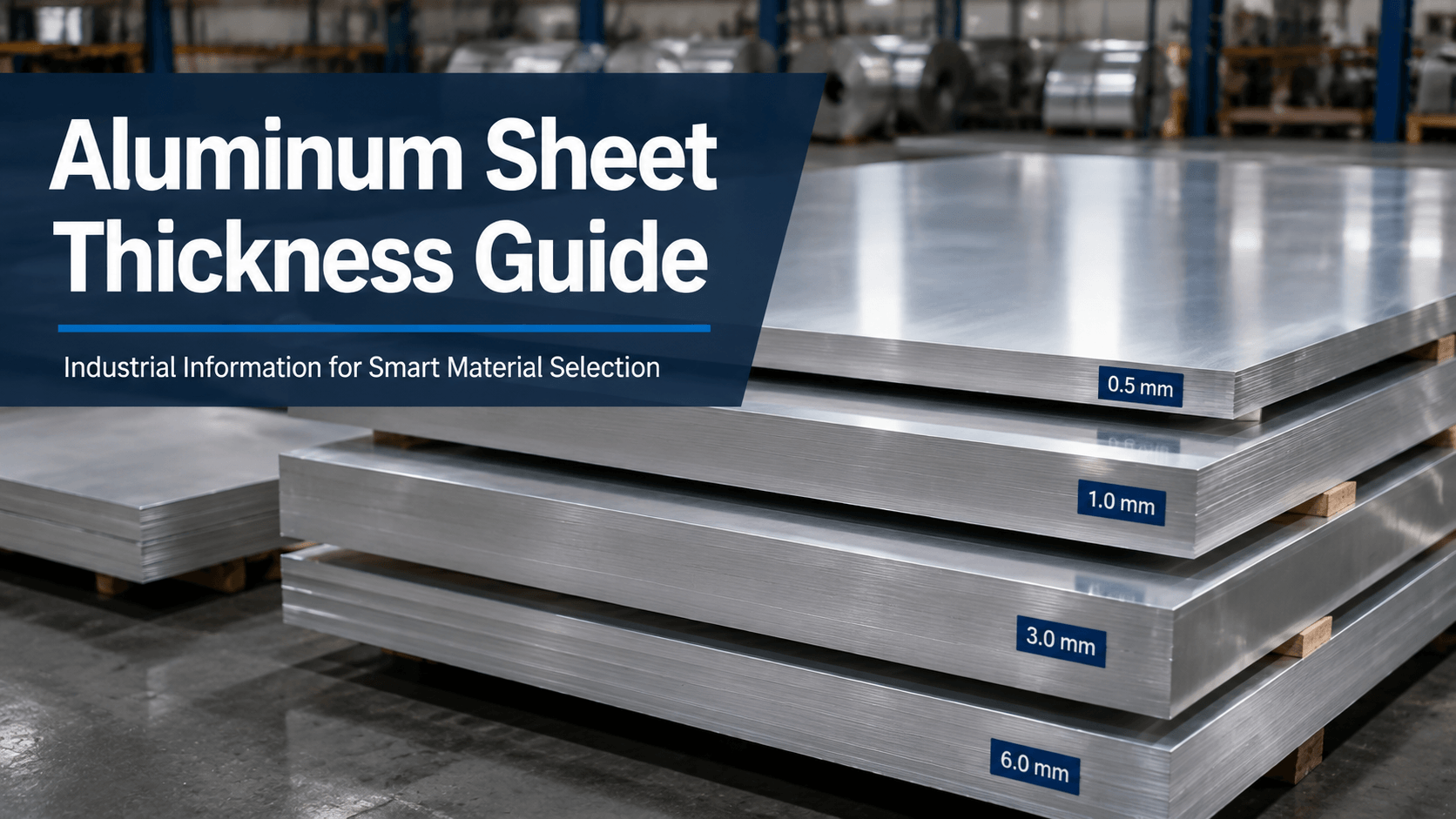
Introduction
Aluminum sheet thickness is one of the most important factors when selecting aluminum materials for industrial applications. Thickness affects strength, weight, formability, machining performance and final product cost.
Aluminum sheets are available in a wide range of thicknesses and aluminum alloys. The correct thickness depends on application requirements, structural load, fabrication method and operating environment.
This guide explains common aluminum sheet thickness ranges, thickness selection methods, alloy considerations and applications to help industrial buyers choose suitable aluminum materials.
Quick Answer: How Thick Should Aluminum Sheet Be?
- Thin aluminum sheets are commonly selected for lightweight structures, covers and forming applications.
- Medium thickness aluminum sheets are widely used for fabrication, transportation and industrial components.
- Thicker aluminum plates are selected when higher strength and load capacity are required.
- The correct thickness depends on alloy grade, application and mechanical requirements.
What Is Aluminum Sheet Thickness?
Aluminum sheet thickness refers to the measurement of the material thickness from one surface to the opposite surface. It is usually specified in millimeters (mm), inches or gauge numbers depending on the market and application.
In industrial purchasing, thickness is normally listed together with aluminum alloy grade, temper condition and sheet dimensions.
For example:
6061-T6 Aluminum Sheet 3 mm × 1500 mm × 3000 mm
6061 = Alloy grade
T6 = Temper condition
3 mm = Thickness
Aluminum Sheet vs Aluminum Plate Thickness
The difference between aluminum sheet and aluminum plate is mainly related to thickness classification. The exact boundary may vary depending on standards and industry usage.
| Product | Typical Thickness Range | Common Applications |
|---|---|---|
| Aluminum Sheet | Thin to medium thickness products | Panels, covers, fabrication parts |
| Aluminum Plate | Thicker material requiring higher strength | Structures, machinery, heavy-duty applications |
Common Aluminum Sheet Thickness Range
Aluminum sheet thickness selection depends on the required strength, weight limitation and manufacturing process.
| Thickness Range | Characteristics | Typical Applications |
|---|---|---|
| 0.2 mm – 1 mm | Lightweight and easy forming | Covers, panels, decorative applications |
| 1 mm – 6 mm | Balanced strength and weight | Industrial fabrication, transportation components |
| 6 mm and above | Higher strength and rigidity | Structural parts and machinery components |
How to Select Aluminum Sheet Thickness
Selecting the correct aluminum sheet thickness requires considering structural requirements, weight limitations, fabrication methods and environmental conditions.
A thicker aluminum sheet generally provides higher rigidity and load capacity, while a thinner sheet offers advantages in weight reduction and easier forming.
| Selection Factor | Consideration |
|---|---|
| Structural Load | Higher loads usually require thicker aluminum sheets for improved strength and rigidity. |
| Weight Requirement | Lightweight designs may use thinner aluminum sheets to reduce overall weight. |
| Fabrication Method | Bending, welding and machining requirements influence suitable thickness selection. |
| Service Environment | Outdoor and industrial environments may require sufficient thickness for long-term durability. |
Aluminum Sheet Thickness and Strength Relationship
Thickness directly affects the bending resistance and structural stability of aluminum sheets. However, the final strength also depends on aluminum alloy grade, temper condition and product design.
| Thickness Level | Strength Characteristics | Typical Use |
|---|---|---|
| Thin Aluminum Sheet | Lightweight with good formability | Panels, covers, decorative components |
| Medium Thickness Aluminum Sheet | Balanced strength and weight performance | Industrial fabrication and transportation parts |
| Thick Aluminum Plate | Higher rigidity and load-bearing capability | Machinery, structures and heavy-duty components |
5052 Aluminum Sheet vs 6061 Aluminum Sheet Thickness Selection
5052 and 6061 aluminum are two commonly used aluminum alloys. Their different alloy characteristics influence thickness selection for industrial applications.
| Material | Thickness Selection Consideration | Common Applications |
|---|---|---|
| 5052 Aluminum Sheet | Often selected where corrosion resistance and forming ability are important. | Marine parts, tanks, panels and fabrication components |
| 6061 Aluminum Sheet | Often selected where higher strength and machining performance are required. | Structural parts, machinery and aerospace components |
Common Aluminum Sheet Thickness Applications
Different industries select aluminum sheet thickness according to performance requirements, weight limitations and manufacturing processes.
| Industry | Typical Thickness Range | Applications |
|---|---|---|
| Transportation | 1 mm – 6 mm | Vehicle panels, lightweight structures and components |
| Construction | 2 mm and above | Building panels, roofing and architectural systems |
| Marine | 3 mm and above depending on structure | Boat components and corrosion-resistant structures |
| Machinery | 5 mm and above for structural parts | Equipment frames and machined components |
Aluminum Sheet Weight Consideration
Aluminum sheet thickness directly affects material weight. Increasing thickness improves rigidity but also increases material consumption and transportation weight.
Industrial buyers should balance strength requirements with weight efficiency when selecting aluminum sheet thickness.
| Thickness | Weight Trend |
|---|---|
| 1 mm | Lightweight, suitable for panels and covers |
| 3 mm | Common industrial thickness with balanced performance |
| 6 mm+ | Higher rigidity for structural applications |
Aluminum Sheet Standards
Aluminum sheet products are supplied according to international standards that define chemical composition, mechanical properties, dimensions and quality requirements. The applicable standard depends on alloy grade, product form and customer requirements.
| Standard | Description |
|---|---|
| ASTM B209 | Standard specification for aluminum and aluminum-alloy sheet and plate |
| EN 485 | European standard for aluminum and aluminum alloy sheet, strip and plate |
| AMS Standards | Aerospace material specifications for aluminum alloy products |
| GB/T Standards | Chinese national standards for aluminum alloy products |
Aluminum Sheet Surface Finish Selection
Besides thickness and alloy grade, surface finish is another important factor when selecting aluminum sheets. Different finishes provide different appearance, corrosion resistance and processing characteristics.
| Surface Finish | Characteristics | Typical Applications |
|---|---|---|
| Mill Finish | Standard aluminum surface after rolling process | General industrial applications |
| Brushed Finish | Decorative surface with directional texture | Architectural and decorative products |
| Anodized Finish | Improved surface protection and appearance | Building and outdoor applications |
FAQ
What is the standard thickness of aluminum sheet?
Common aluminum sheet thicknesses range from thin sheets below 1 mm to thicker industrial sheets of several millimeters. The correct thickness depends on alloy grade, application and strength requirements.
What thickness aluminum sheet should I use?
The suitable aluminum sheet thickness depends on the application. Lightweight panels may use thinner sheets, while structural components generally require thicker materials for improved rigidity and load capacity.
What is the difference between aluminum sheet and aluminum plate?
The difference is mainly related to thickness classification. Aluminum sheet is generally associated with thinner products, while aluminum plate refers to thicker materials used for higher-strength applications.
Is thicker aluminum sheet always stronger?
Thicker aluminum generally provides higher rigidity, but final strength also depends on alloy grade, temper condition and product design.
What aluminum alloy is commonly used for industrial sheets?
Common industrial aluminum sheet alloys include 5052 for corrosion resistance and forming performance, and 6061 for higher strength and machining applications.
Aluminum Sheet Supply from SASA Aluminum
SASA Aluminum supplies aluminum sheets and plates in various alloy grades, thicknesses and surface conditions for industrial applications.
Available materials include commonly used aluminum alloys such as 5052, 6061, 6063 and other grades according to customer requirements.
Products can be supplied with customized thickness, width, length, surface treatment, cutting service and material certificates.
For aluminum sheet requirements, please provide alloy grade, temper condition, thickness, dimensions, quantity and application information.
Conclusion
Selecting the correct aluminum sheet thickness requires balancing strength, weight, fabrication requirements and application conditions.
Thin aluminum sheets provide excellent lightweight and forming advantages, while thicker aluminum plates provide improved rigidity and structural performance.
By understanding aluminum sheet thickness ranges, alloy selection and temper conditions, industrial buyers can choose materials that provide reliable performance and cost efficiency.
Post time: Jul-27-2026