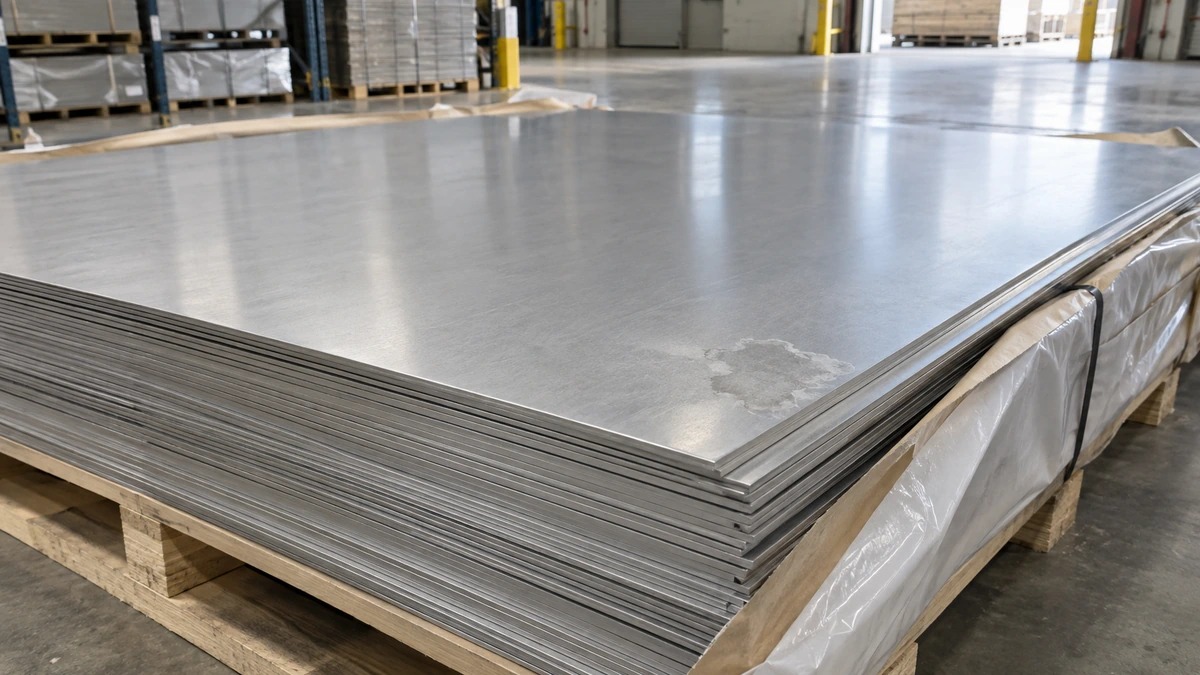
Water stains on aluminum sheet often begin with moisture trapped between surfaces. Rain is only one possible source: a cold sheet pack moved into warm, humid air can collect condensation even inside a roofed warehouse. Prevention starts with dry packaging, controlled storage and a receiving procedure that considers metal temperature as well as visible damage.
For sheet-metal fabricators and purchasing teams, the key decision is whether an arriving pack can be released for processing. A material certificate confirms specified material information; it does not describe the surface condition after transport. This guide focuses on receiving and storage decisions for aluminum sheet and plate, rather than general outdoor corrosion.
Why a Dry-Looking Delivery Can Develop Water Stains
Condensation forms when the metal surface is below the dew point of the surrounding air. A heavy pack may warm more slowly than the warehouse air. Moisture can then enter narrow spaces between sheets, where it is difficult to remove. The Aluminum Association describes this mechanism in its guidelines for minimizing water staining.
The practical implication is that “indoors” and “dry” are different conditions. Before opening a cold, apparently dry pack, check its temperature against the local dew point and allow controlled acclimatization. A pack that is already wet requires a separate response: leaving known trapped water sealed inside is not an acclimatization strategy.
Receiving Inspection: Record the Evidence Before Processing
Inspect packaging for wetness, tears and impact damage during receipt and notify purchasing or quality personnel if damage is found. Surface-sensitive sheets may use interleaving to reduce abrasion, but this does not remove the need for moisture precautions. These points are covered in the Aluminum Association’s sheet, plate and coil handling guidance.
Build a useful arrival record
- Identify the pack: purchase order, alloy, temper, thickness, pack number and received quantity.
- Photograph the condition: take an overall view, packaging details and close-up views of any affected surface.
- Record the environment: note arrival time, metal temperature, ambient temperature and relative humidity where practical.
- Map the affected material: distinguish isolated edge marks from staining found on several layers.
- Preserve traceability: retain labels and keep affected material identified until quality personnel decide its disposition.
This record makes discussion with the supplier more specific. “The aluminum arrived damaged” is much less useful than an identified pack, photographs and a description of which faces or layers are affected. Record observations without assigning an unverified cause.
Separate Moisture Control from Scratch Protection
Dry storage and controlled temperature changes
Store intact packs in a dry area, avoid large temperature and humidity swings, and review the effect of frequently opened doors. When material moves between environments, use measured conditions rather than a universal waiting period. Pack size, starting temperature and surrounding conditions determine how quickly it stabilizes.
Handling and surface protection
Support and handle packs using appropriate equipment and clean contact surfaces. The handling guidance emphasizes avoiding scratches and physical damage as well as staining. Paper or film selected for surface protection should be agreed for the intended downstream process; protective packaging is not evidence that every storage environment is suitable.
For a decorative panel order, specify the face that will remain visible. For machining stock, identify surfaces that will remain on the finished part. This lets the acceptance discussion address the actual use instead of treating every mark as equally important.
What to Do When a Pack Is Already Wet
Flag the material for quality review and arrange prompt, controlled assessment with the supplier. Avoid routine release into production while the condition is unresolved. If separation or drying is needed, agree a method appropriate to the pack and available handling equipment.
Do not automatically polish, chemically clean or coat the marks before their extent is documented. A proposed recovery method should be checked against surface finish, dimensional allowance and the customer’s acceptance criteria. For parts requiring anodizing or a visible finish, a representative finishing trial may be a useful acceptance step if agreed by the responsible parties.
Specify Surface Expectations Before Ordering
A useful enquiry for aluminum sheet and plate should connect the material specification with how the product will be received and used. Along with alloy, temper and dimensions, include:
- The final application and any visible or finish-critical face.
- Whether the material will be machined, formed, anodized, painted or used as supplied.
- Agreed appearance criteria, reference samples or inspection photographs where needed.
- Pack weight and size limits dictated by unloading and storage equipment.
- Requested interleaving, surface protection and destination conditions for review.
These are procurement recommendations, not a universal surface acceptance standard. The ordered product specification and agreed quality requirements govern acceptance.
Two Common Questions
Does a water mark automatically mean the entire pack is unusable?
No automatic decision should be made from a description alone. Establish the affected area, any measurable surface damage, the intended finish and the acceptance criteria. Cosmetic appearance and suitability for the finished part must be assessed together.
Can packaging alone guarantee stain-free arrival?
Packaging, transport, receiving and storage form one protection process. Review the route and receiving arrangements with the supplier instead of relying on a packaging label alone.
Send SASAALUMINUM your sheet or plate specification, required finish, quantity and destination so the material and packaging requirements can be reviewed together.
Post time: Sep-09-2026