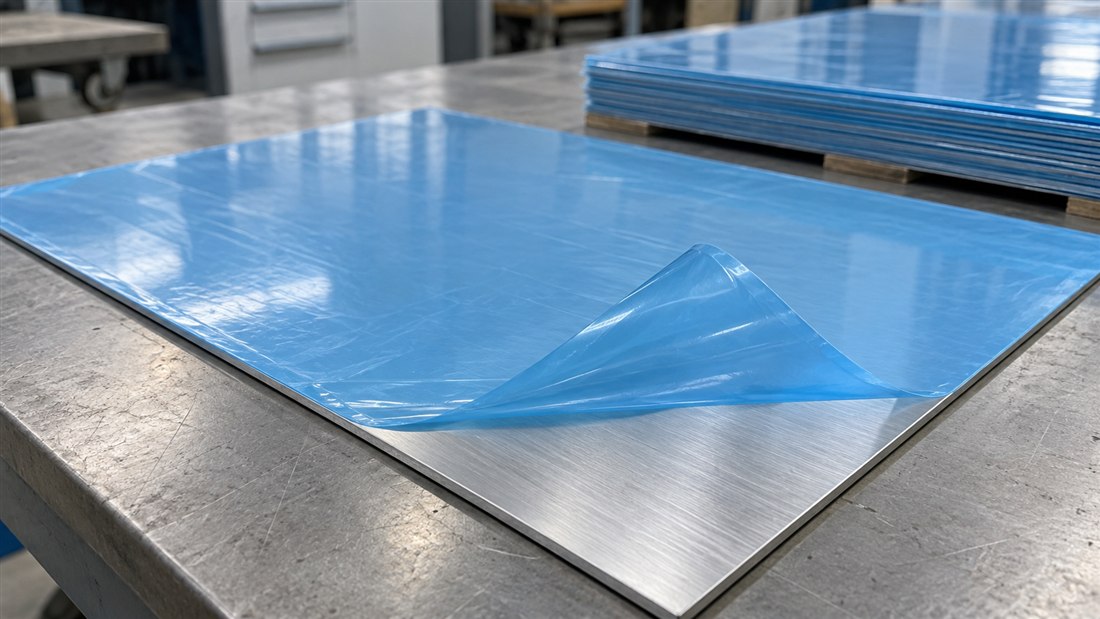
Choose aluminum sheet protective film by the surface and the complete processing route, not by film colour alone. The film should protect the required face during handling, remain suitable for the agreed fabrication steps and peel away without an unacceptable change to the finished surface. Blue, clear or white film does not, by itself, identify the adhesive, outdoor exposure limit or laser-cutting compatibility.
For buyers of visible panels, covers and sheet-metal components, a useful film specification answers three questions: what surface is being protected, what happens before removal, and how will the exposed surface be accepted?
Start with the Actual Aluminum Surface
Mill-finished, brushed, anodized and painted aluminum should not be treated as identical adhesive substrates. Surface texture, cleanliness and the condition of a coating can influence how a film bonds and releases. A film that works on one sample may behave differently after a change in surface treatment or processing.
Identify the visible face on the drawing. State whether protection is needed on one side or both, and whether the surface will later be painted, bonded or otherwise finished. Trace adhesive residues may matter to a later process even when the sheet initially looks clean.
Film Thickness Is Only One Part of the Specification
A thicker backing is not a universal solution to surface damage. Adhesion, flexibility, release behaviour and compatibility with the operation also need consideration. Request a defined film grade or agreed performance requirement instead of the instruction “use thick film.” Confirm whether a quoted thickness describes the backing or the total product.
Match Protection to the Next Manufacturing Step
| Operation | What to confirm before ordering |
|---|---|
| Handling and transport | Protected face, edge coverage, storage conditions and expected time before removal. |
| Bending or forming | Film suitability for deformation, tooling contact and any specified lubricant; inspect a processed sample for imprints or lifting. |
| Laser cutting | Explicit compatibility with the laser process, film side, substrate and approved cutting conditions. |
| Painting or bonding | Removal stage, cleanliness acceptance and compatibility with the subsequent surface preparation. |
| Installation and exposure | Permitted exposure conditions and the removal deadline for the specific film and surface combination. |
Laser-compatible protection is a specific product capability. An ordinary transport film should not be assumed suitable simply because it looks like a film used successfully on another cutting job. Confirm the film with the cutting process owner before processing a full shipment.
When selecting the starting material from the aluminum sheet and plate range, specify the alloy, temper and surface first, then describe the required protective film and downstream operations. This keeps material selection and surface protection connected in the quotation.
Why Adhesive Residue or Difficult Peeling Can Occur
Residual machining oil, unsuitable application conditions and a mismatch between adhesive and substrate can affect release. Time, sunlight, temperature and humidity may also change performance. These factors explain why successful peeling immediately after delivery is not enough to qualify a film for a long fabrication and installation schedule.
Do Not Apply One Removal Deadline to Every Film
Shelf life in the original package, permissible time on the aluminum and allowed outdoor exposure are different limits. Obtain the applicable guidance for the selected product. Record the application date and planned removal stage rather than relying on a general “remove within a few months” instruction.
A Small Trial Can Resolve a Large Purchasing Risk
Before approving an unfamiliar film, prepare representative material with the intended finish. Label the surface batch, film identification and application date. Use the same cleaning and application method intended for production, then run the relevant fabrication steps.
At the agreed removal stage, assess peeling, adhesive transfer, visible marks and any change to the surface. Where the next operation is bonding or coating, evaluate that operation too. A release test and a successful finish or bond test answer different questions.
Keep an approved reference sample or documented acceptance photos. If the film grade, finish or process changes later, review whether the original trial still represents the new combination. This is a practical approval method, not a claim that one small trial certifies every future storage condition.
If Film Does Not Peel Normally
Set aside the affected pieces and document the film, surface and exposure history. Obtain a compatible recovery procedure before using heat, a solvent or abrasive cleaning. A method that removes adhesive from bare sheet may damage paint, anodizing or the required appearance. Validate the agreed method on a representative test area before treating visible production surfaces.
What to Check When the Aluminum Arrives
- Confirm the protected face, film identification and traceability against the order.
- Look for tears, folds, lifted edges, trapped debris or evidence of wet packaging.
- Inspect the metal beneath a sample area using the agreed sampling plan; the film can conceal a surface defect.
- Record any deviation before broad removal or processing makes the original condition difficult to establish.
Questions for Sheet Buyers
Is blue protective film always suitable for aluminum?
Colour does not define suitability. Check the film grade, actual aluminum finish, intended process and removal conditions.
Should both sides of a sheet have film?
Specify protection according to exposed faces and handling contact. A hidden face may still require protection during processing, while a one-sided visible panel does not automatically justify identical films on both sides.
What should I include in an aluminum sheet inquiry?
Provide alloy, temper, thickness, width, length, quantity, finish, protected faces, processing route and expected removal stage. Include an approved film specification if one exists. SASA ALUMINUM can review the requested material and surface-protection requirements before confirming the supply arrangement.
Post time: Sep-10-2026