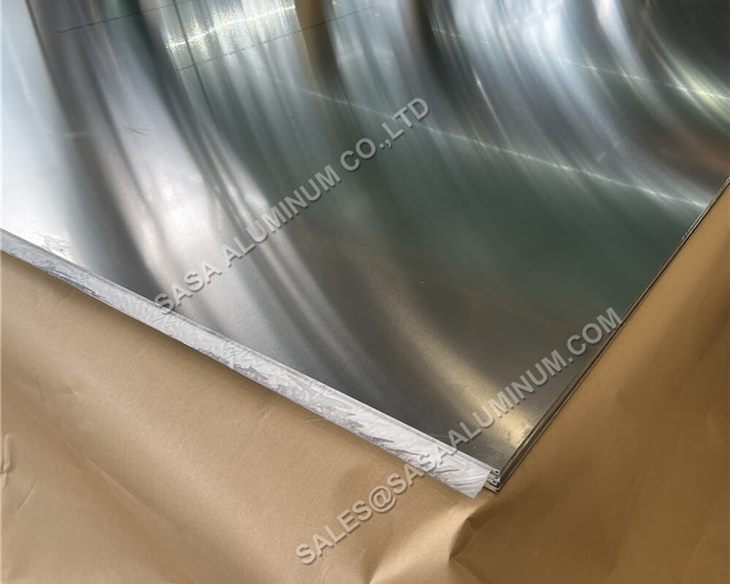
Selection answer: choose a 5xxx alloy when the design benefits from a non-heat-treatable aluminium-magnesium alloy, strong corrosion performance and a product form such as sheet or plate. Choose a 6xxx alloy when heat-treatable aluminium-magnesium-silicon chemistry, extrusion capability and a defined T temper better match the component. Neither series is universally stronger, more corrosion resistant or easier to fabricate—the result depends on the exact alloy, temper, thickness, product standard and manufacturing route.
The Engineering Difference at a Glance
| Selection factor | 5xxx series | 6xxx series |
|---|---|---|
| Principal alloying system | Magnesium is the principal alloying addition | Magnesium and silicon are used to form the strengthening Mg-Si phase |
| Strengthening route | Non-heat-treatable; strength is controlled mainly by alloy chemistry, strain hardening and temper processing | Heat-treatable; strength is developed through solution treatment, quenching and natural or artificial ageing as applicable |
| Common product emphasis | Sheet, plate, coil and welded flat-product applications; availability varies by alloy | Extrusions, bars, tubes, profiles, sheet and plate; the available forms vary by alloy and standard |
| Typical temper families | O, H111, H112, H32, H34, H116, H321 and other alloy/product-specific conditions | O, T4, T5, T6, T651 and T6511, subject to product form and specification |
| Welding consequence | Cold-worked tempers can soften in the heat-affected zone | Precipitation-hardened tempers normally lose strength in the heat-affected zone unless the design and qualified process account for recovery or post-weld treatment |
The Aluminum Association classifies 5xxx alloys as non-heat-treatable aluminium-magnesium alloys and 6xxx alloys as heat-treatable aluminium-magnesium-silicon alloys. These family-level descriptions help narrow the search, but mechanical-property acceptance must come from the standard for the selected alloy, temper, product form and thickness.
Where 5xxx Aluminium Is Usually Considered
Sheet and Plate Requiring Formability or Corrosion Performance
5052 and 5754 are frequently evaluated for formed sheet, enclosures, vehicle components, tanks and general fabricated parts. Their suitability depends on the required strength, bend radius, surface condition, environment and joining process. A harder H temper can raise strength while reducing forming margin, so temper cannot be selected from strength alone.
Marine and Welded Plate
5083 and 5086 are commonly considered for marine and welded structures, but marine use requires more than the alloy number. Plate ordered to ASTM B928/B928M, applicable EN requirements or classification-society rules may require a specific temper, corrosion-performance controls, traceability and inspection. H116 and H321 are separate purchase conditions and must not be substituted without engineering approval.
For a marine flat-product RFQ, review the ASTM B928 5083-H116 marine aluminium plate specification and confirm the required standard edition, thickness, width, length, corrosion-testing scope and documentation.
High-Magnesium Alloy Service Conditions
High-magnesium 5xxx alloys need alloy-, temper- and service-specific review when prolonged elevated-temperature exposure or sensitization is a concern. It is not responsible to apply one universal service-temperature limit to every 5xxx alloy and thickness. The responsible engineer should use the governing material and design requirements for the actual exposure, stress and product condition.
Where 6xxx Aluminium Is Usually Considered
Extruded Profiles and Structural Sections
6xxx alloys are widely used for extrusions because they combine extrudability, useful strength, corrosion resistance and finishing potential. 6063 is often chosen where surface finish and complex architectural profiles matter; 6061, 6005A and 6082 are considered for structural or machined sections according to regional standards, loading and fabrication requirements. This is a family tendency, not permission to substitute one alloy for another.
Temper Controls Strength and Fabrication Behaviour
A designation such as 6061 is incomplete for procurement. 6061-T4, 6061-T6 and stress-relieved variants do not have the same properties or dimensional behaviour. T5 and T6 also describe different processing routes. The drawing and purchase order should state the full temper and the applicable product specification.
For extruded structural components, a related starting point is the 6061 aluminium extruded angle range. Confirm the required temper, profile dimensions, straightness, twist, corner geometry, surface finish and inspection rather than assuming that all 6061 extrusions have identical properties.
Welding Changes Both Alloy Families
Both families are commonly welded, but “good weldability” does not mean that the joint automatically retains parent-material strength. Fusion welding changes the local thermal history and can soften the heat-affected zone.
| Question | What must be confirmed |
|---|---|
| Which strength controls the design? | Parent metal, weld metal and heat-affected-zone properties under the applicable design code |
| Can the original temper be restored? | Whether post-weld heat treatment is practical and qualified for the assembly, geometry and alloy |
| Which filler is suitable? | Base-alloy combination, joint strength, corrosion exposure, service temperature and anodizing/appearance requirements |
| How will distortion be controlled? | Thickness, joint design, heat input, sequence, restraint, straightening allowance and final tolerance |
| What inspection is required? | Visual, dimensional, NDT, procedure qualification and acceptance criteria specified by the project |
For 5xxx material strengthened by cold work, welding can locally reduce the strain-hardened condition. For precipitation-hardened 6xxx tempers, welding modifies or overages the strengthening precipitates in the heat-affected zone. The design should therefore use qualified welded-joint properties rather than the unwelded mill-certificate value alone.
Forming, Machining and Surface Finish
Forming
Formability depends strongly on temper, thickness, rolling direction, bend radius, edge quality and tooling. Annealed or lower-strength conditions generally allow more forming than harder tempers, but the acceptable bend must be verified for the exact alloy and product specification. A series-level statement cannot establish a safe bend radius.
Machining
Machining behaviour varies within each family. A 6xxx alloy in a stable T temper is often selected for machined extrusions, while some 5xxx plate is chosen for fabricated or machined components where corrosion performance is important. For precision machining, include flatness, residual-stress condition, stock allowance, grain direction and final dimensional stability in the material review.
Anodizing and Appearance
Both families can receive surface treatments, but decorative appearance and colour uniformity depend on alloy chemistry, extrusion or rolling history, surface preparation and anodizing process. If appearance is a contractual requirement, define the reference sample, viewing conditions and acceptable variation instead of specifying only “anodized aluminium.”
A Better Selection Workflow
- Define the service condition: load, temperature, corrosion exposure, fatigue, electrical/thermal needs and expected life.
- Choose the product form: sheet, plate, extrusion, bar, tube, forging or machined blank.
- Select a specific alloy and temper: do not stop at the series number.
- Check fabrication: forming, welding, machining, heat treatment, anodizing and coating.
- Apply the governing standard: confirm edition, dimensional tolerances and mechanical-property limits for the actual thickness or section.
- Define inspection and documentation: MTC, heat/lot traceability, dimensional report, PMI or other testing only as required.
RFQ Information for 5xxx or 6xxx Aluminium
- Alloy, full temper and governing material standard
- Product form, thickness or section dimensions, width, length and quantity
- Dimensional tolerances, flatness, straightness, twist and surface requirements
- Service environment and critical design constraints
- Forming, welding, machining, anodizing or coating requirements
- Testing, traceability, documentation and third-party inspection scope
- Drawing, destination country and packing requirements
Send the complete purchase specification rather than asking only for “5 series versus 6 series.” SASA ALUMINUM can review the requested alloy, temper, product form and inspection scope before confirming supply feasibility and quotation.
Post time: Oct-27-2025