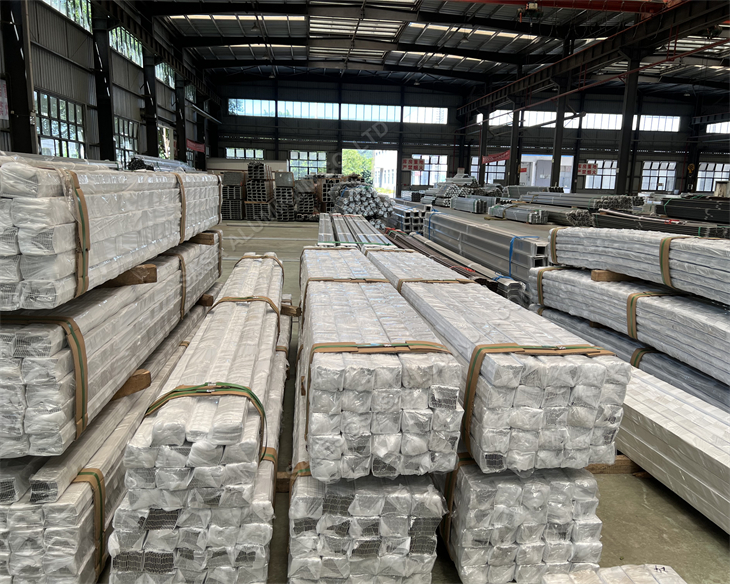
Direct answer: 2219 temper selection must match the product form, section range, fabrication route and required property direction. T31, T37, T62, T81 and T851 designations are not interchangeable labels.
The 2219 aluminum alloy is one of the most trusted materials in aerospace engineering, renowned for its high strength, excellent toughness, and outstanding weldability. It belongs to the 2000-series aluminum alloys, which are copper-based and designed primarily for high-temperature structural applications such as fuel tanks, fuselage skins, and cryogenic pressure vessels.
To achieve its remarkable performance, 2219 aluminum can be supplied in several heat-treated tempers — each providing a specific balance of strength, ductility, and machinability. The most common tempers include T31, T37, T62, T81, and T851.
In this article, SASAALUMINUM provides an in-depth explanation of these temper designations, their processing routes, mechanical properties, and industrial applications.
1. Overview of 2219 Aluminum Alloy
2219 aluminum alloy is a high-strength wrought aluminum-copper alloy (Al–Cu–Mn system) known for its exceptional weldability and thermal stability. Its key advantage is its ability to retain strength after welding, unlike many other heat-treatable alloys that lose strength in the heat-affected zone.
1.1 Typical Chemical Composition
| Element | Content (%) |
|---|---|
| Copper (Cu) | 5.8 – 6.8 |
| Manganese (Mn) | 0.20 – 0.40 |
| Iron (Fe) | ≤ 0.30 |
| Silicon (Si) | ≤ 0.20 |
| Zinc (Zn) | ≤ 0.10 |
| Vanadium (V) | 0.05 – 0.15 |
| Titanium (Ti) | ≤ 0.15 |
| Aluminum (Al) | Balance |
This combination gives 2219 aluminum its excellent strength at elevated temperatures (up to 300°C) and superior weld-joint efficiency, making it a favorite in aircraft, space, and missile structures.
2. The Importance of Temper Designations
The temper of an aluminum alloy describes the heat treatment and mechanical processing condition applied to it. Each temper affects the alloy’s:
-
Strength and hardness
-
Ductility and toughness
-
Formability and machinability
-
Stress-corrosion resistance
For 2219 aluminum, several tempers (T31, T37, T62, T81, T851) are available to meet different design requirements — from moderate strength and formability to maximum tensile performance.
3. Understanding the Temper Designations
Before diving into individual tempers, it helps to understand what the “T” code means.
In aluminum terminology:
-
T = Heat-treated to produce stable tempers other than F (as fabricated), O (annealed), or H (strain-hardened).
-
Numbers after T indicate the specific heat-treatment sequence.
For example:
-
T3 = Solution heat-treated, cold worked, and naturally aged.
-
T8 = Solution heat-treated, cold worked, and artificially aged.
-
T851 = Solution heat-treated, stress-relieved by stretching, and artificially aged.
These treatments alter the precipitation of strengthening phases (mainly Al₂Cu) in the alloy matrix, directly affecting performance.
4. 2219-T31 Temper
4.1 Heat Treatment Process
The T31 temper is produced by:
-
Solution heat treatment (around 530°C),
-
Cold working (light strain), and
-
Natural aging at room temperature.
This condition is a moderately strengthened version of 2219, offering good formability and weldability.
4.2 Typical Properties
| Property | Typical Value |
|---|---|
| Ultimate Tensile Strength | 345 MPa |
| Yield Strength | 240 MPa |
| Elongation | 18% |
| Brinell Hardness | ~95 HB |
4.3 Features and Applications
-
Retains good ductility for forming and bending
-
Moderate strength suitable for fuel tanks and pressure vessels
-
Excellent toughness and machinability
The T31 condition is often used for large welded assemblies, where subsequent artificial aging is done after fabrication to restore strength.
5. 2219-T37 Temper
5.1 Process Description
The T37 temper involves:
-
Solution heat treatment
-
Cold working
-
Artificial aging at intermediate temperature
This condition provides slightly higher strength than T31 while maintaining excellent toughness.
5.2 Typical Mechanical Properties
| Property | Typical Value |
|---|---|
| Ultimate Tensile Strength | 365 MPa |
| Yield Strength | 255 MPa |
| Elongation | 16% |
| Brinell Hardness | ~100 HB |
5.3 Key Characteristics
-
Balanced strength and ductility
-
Good machinability and weld joint efficiency
-
Stable under moderate thermal cycling
Commonly used in rocket fuel tanks and aerospace structural panels, where controlled hardness and weld response are essential.
6. 2219-T62 Temper
6.1 Process Description
The T62 temper is achieved through:
-
Solution heat treatment,
-
Quenching, and
-
Artificial aging to achieve full precipitation hardening.
No cold working is applied after quenching, making T62 easier to fabricate but still quite strong.
6.2 Typical Mechanical Properties
| Property | Typical Value |
|---|---|
| Ultimate Tensile Strength | 420 MPa |
| Yield Strength | 310 MPa |
| Elongation | 12% |
| Brinell Hardness | ~115 HB |
6.3 Applications and Benefits
-
High strength combined with excellent weldability
-
Maintains mechanical properties up to 300°C
-
Ideal for cryogenic fuel tanks, missile components, and space vehicle skins
The T62 temper is a standard condition for many NASA and aerospace programs, balancing performance with weld integrity.
7. 2219-T81 Temper
7.1 Processing
The T81 temper involves:
-
Solution heat treatment
-
Cold working (controlled amount)
-
Artificial aging
Cold work introduces dislocations that accelerate the precipitation of Al₂Cu, enhancing both yield and tensile strength.
7.2 Typical Mechanical Properties
| Property | Typical Value |
|---|---|
| Ultimate Tensile Strength | 470 MPa |
| Yield Strength | 370 MPa |
| Elongation | 10% |
| Brinell Hardness | ~125 HB |
7.3 Features
-
Very high strength while maintaining good fracture toughness
-
Resistant to stress corrosion cracking
-
Excellent performance under cyclic thermal loads
This condition is widely used in aircraft fuselage frames, wing spars, and high-pressure structures where weight-to-strength ratio is critical.
8. 2219-T851 Temper
8.1 Process Sequence
The T851 temper is one of the highest-strength and most stable conditions for 2219. It includes:
-
Solution heat treatment
-
Stress relief by stretching (1–3%)
-
Artificial aging
This combination relieves residual stresses from manufacturing and enhances dimensional stability.
8.2 Mechanical Properties
| Property | Typical Value |
|---|---|
| Ultimate Tensile Strength | 480 MPa |
| Yield Strength | 380 MPa |
| Elongation | 9% |
| Brinell Hardness | ~130 HB |
8.3 Advantages
-
Highest strength among standard 2219 tempers
-
Excellent stability during machining and welding
-
Resistant to warping and distortion after heat cycles
The T851 condition is often selected for critical aerospace structures, including pressure domes, rocket tanks, and structural forgings used in launch vehicles.
9. Comparative Summary of 2219 Tempers
| Temper | Process | Strength | Ductility | Stress Relief | Applications |
|---|---|---|---|---|---|
| T31 | Solution-treated + natural aged | Moderate | High | No | Fuel tanks, formable parts |
| T37 | Solution-treated + artificial aged | Medium | High | No | Aerospace panels |
| T62 | Solution-treated + aged | High | Moderate | No | Cryogenic tanks |
| T81 | Solution-treated + cold worked + aged | Very High | Moderate | Partial | Aircraft structure |
| T851 | Solution-treated + stretched + aged | Maximum | Moderate | Yes | Forgings, rocket domes |
Each condition provides a unique combination of mechanical performance, workability, and thermal stability, giving engineers flexibility to match the alloy’s condition to its intended environment.
10. 2219 Aluminum Alloy in Aerospace Applications
Thanks to its weldability and stability, 2219 aluminum is widely used in the aerospace sector, especially in:
-
Liquid-fuel rocket tanks (SpaceX, NASA, ESA programs)
-
Cryogenic vessels and propellant tanks
-
Aircraft wing panels and fuselage frames
-
Spacecraft structural components
-
High-pressure tubing and fittings
Its ability to retain strength after welding and exposure to high temperatures makes it ideal for fuel containment systems and load-bearing aerospace structures.
11. Heat Treatment and Microstructural Behavior
The strength of 2219 aluminum alloy comes from precipitation hardening, where fine particles of θ’ (Al₂Cu) form during aging. These precipitates hinder dislocation movement, increasing strength.
-
Lower temperature aging (T31, T37) → Coarser precipitates → Higher ductility
-
Higher temperature aging (T81, T851) → Fine, dense precipitates → Higher strength
Proper control of heat treatment temperature and time ensures consistent grain structure, preventing over-aging or loss of mechanical properties.
12. Weldability and Post-Weld Heat Treatment
A key reason for 2219’s dominance in aerospace is its superior weld-joint strength compared to other aluminum alloys. After welding:
-
The heat-affected zone (HAZ) retains up to 80–90% of base metal strength.
-
Post-weld aging (to T62 or T81) restores strength and hardness.
This makes 2219 ideal for large welded assemblies, such as launch vehicle fuel domes and cryogenic vessels, where weld integrity is critical.
13. Thermal Stability and Service Temperature
2219 aluminum maintains excellent mechanical stability up to 300°C (570°F) and resists creep and fatigue at elevated temperatures. Unlike many high-strength alloys, it also performs reliably in cryogenic environments, making it suitable for both hot and cold aerospace missions.
14. Machinability and Surface Treatment
-
Machinability: Good in the T31 and T37 tempers; harder tempers require carbide tooling.
-
Anodizing: Provides a uniform, corrosion-resistant surface finish.
-
Cladding: 2219 is often unclad but can be coated with pure aluminum for additional protection in corrosive atmospheres.
Proper finishing ensures durability in marine, aerospace, and launch vehicle environments.
15. Typical Standards and Specifications
2219 aluminum alloy is produced and certified according to international standards, including:
-
AMS 4066 / AMS 4068 – Aerospace sheet and plate specifications
-
AMS 4162 / AMS 4163 – Bar and forging stock
-
ASTM B209 – Aluminum plate and sheet
-
ASTM B211 / B221 – Extruded bar, rod, and profiles
SASAALUMINUM ensures that all supplied products conform to these standards, supported by EN 10204 3.1/3.2 mill certificates and full traceability.
(Logo SASAALUMINUM)
16. Choosing the Right Temper for Your Project
When selecting a temper for 2219 aluminum, consider:
-
Strength requirements: T81 and T851 for maximum performance
-
Formability: T31 or T37 for easy shaping
-
Thermal stability: T62 and T851 for high-temperature service
-
Welded assemblies: T31 (pre-weld) and T62 (post-weld aging)
Working with the correct temper ensures both performance and longevity in demanding aerospace environments.
17. Why Aerospace Prefers 2219 Over Other Alloys
Compared to 2024 and 7075, 2219 offers:
-
Better weld strength retention
-
Higher creep resistance at elevated temperatures
-
Less sensitivity to stress corrosion cracking
-
Excellent cryogenic performance
For this reason, it remains a primary material for NASA, SpaceX, and defense aerospace programs even after decades of use.
18. SASAALUMINUM — Your Trusted 2219 Alloy Supplier
SASAALUMINUM specializes in supplying 2219 aluminum alloy in all standard tempers (T31, T37, T62, T81, and T851). Our advantages include:
-
Certified aerospace-grade quality (AMS, ASTM, EN)
-
Precision heat treatment and testing
-
Global export experience to the US, Europe, and Asia
-
Custom-cutting and machining services
-
Rapid delivery and reliable logistics
Every product is inspected, tested, and packaged to meet aerospace industry requirements.
SASAALUMINUM – Precision, Strength, and Innovation in Every Alloy.
(Logo SASAALUMINUM)
19. Key Takeaways
| Temper | Key Feature | Primary Application |
|---|---|---|
| T31 | Formable, weldable | Cryogenic tanks |
| T37 | Balanced strength | Aerospace skins |
| T62 | Fully aged, strong | Space vehicle structures |
| T81 | Cold worked, very strong | Aircraft frames |
| T851 | Stress relieved, highest strength | Rocket domes, forgings |
Choosing the correct temper allows engineers to maximize the alloy’s performance under specific operating conditions.
20. Conclusion
The 2219 aluminum alloy continues to play a vital role in modern aerospace and space exploration programs. Its range of available tempers — T31, T37, T62, T81, and T851 — provides engineers with flexible solutions for every stage of design, fabrication, and service performance.
Each temper offers a unique combination of strength, toughness, and thermal stability, ensuring that 2219 remains one of the most trusted materials for critical aerospace structures.
At SASAALUMINUM, we are proud to supply certified, high-quality 2219 aluminum alloy products to meet the world’s most demanding aerospace standards.
Request 2219 Material Review
Post time: Oct-29-2025