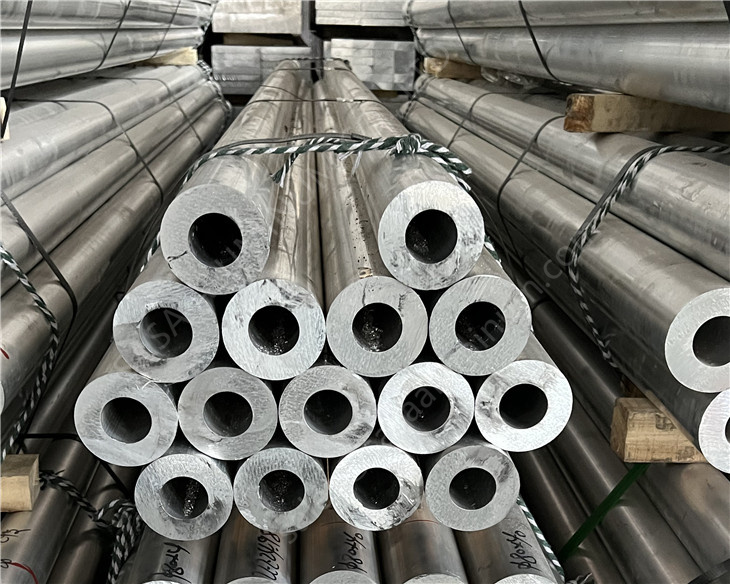
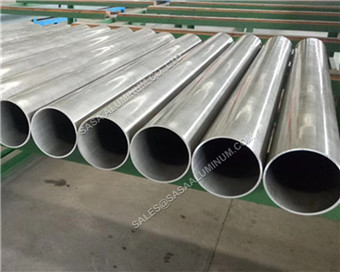
7075-T6 thin-walled aluminium tube is considered where a design calls for a high-strength aluminium alloy, but strength alone is not enough to specify it. Wall control, straightness, supplied temper, corrosion exposure and the planned joining method all matter. The terms “aircraft grade” and “seamless” do not by themselves establish dimensional precision, pressure rating or approval for a particular component.
Specify Tube Geometry Before Comparing Offers
For a round tube, provide outside diameter, wall thickness and length, together with the required tolerances. If inside diameter is the controlling dimension, make that clear on the drawing. A nominal wall value alone does not describe allowable eccentricity, ovality or local variation, which can matter for thin-wall parts.
| Requirement | What to include |
|---|---|
| Material | 7075, full temper and governing specification. |
| Dimensions | Outside/inside diameter basis, wall, cut length and tolerances. |
| Form | Round tube or a separately defined shaped section; do not treat box sections as equivalent. |
| Condition | Straightness, end preparation and surface acceptance requirements. |
| Evidence | Required material certificate, traceability and inspection scope. |
What T6 Does—and Does Not—Tell You
7075 is an alloy designation; T6 identifies a solution heat-treated and artificially aged condition. The designation is not a single strength value valid for every product and thickness. Use the applicable product specification to establish acceptance requirements and distinguish typical reference data from lot test results.
O and T73 are different conditions, not alternative spellings of T6. Do not substitute one temper for another because the alloy number is unchanged. Any decision to form in one condition and subsequently heat treat requires an approved production route, dimensional allowance and inspection plan.
Seamless Construction and Drawing Require Clear Definitions
ASTM B210/B210M addresses drawn seamless tube, while ASTM B241/B241M addresses seamless pipe and seamless extruded tube. Confirm that the chosen specification covers the ordered alloy, temper and dimensions. Do not list multiple standards as if each automatically applies to every 7075 tube.
If the drawing requires seamless material, specify that requirement explicitly. Drawing an unspecified hollow extrusion does not by itself demonstrate that the starting product was seamless. Ask for confirmation of the manufacturing route and documentation appropriate to the order.
Plan Machining, Joining and Surface Protection Together
Machining a thin wall
A thin-wall section can be sensitive to workholding, material removal and handling damage. Identify final dimensional requirements and discuss appropriate stock allowance before ordering. A tube that meets incoming dimensions is not a guarantee that every subsequent machining sequence will preserve them.
Joining
7075 should not be treated as a routine general-purpose arc-welding alloy. Published research identifies significant conventional arc-weldability challenges. Do not transfer a welding practice used for a different aluminium grade to 7075-T6. Any proposed welding or other joining method must be reviewed and qualified for the actual component.
Service environment
High strength does not establish universal corrosion suitability. Review exposure, surface protection, contact with other metals and the design’s approved material condition. A generic comparison article cannot approve this tube for a hydraulic, marine or aerospace assembly.
Use Application Examples as Context, Not Approval
7075 is associated with demanding lightweight components, including aerospace and performance-related applications. That association does not mean every 7075 tube is certified for those uses. A procurement specification must identify the required standard, traceability and testing, and any customer or regulatory approvals must be established independently.
For a new design, evaluate the complete requirement rather than selecting the highest-strength alloy by default. If bending, welding, corrosion resistance or availability dominates the application, an engineer may need to compare other alloys or product routes before approving the material.
Send a Complete Tube Requirement
Review the aluminium pipe and tube range and send the drawing, alloy, temper, dimensions, quantity, destination and required documents. Flag thin-wall features, critical tolerances and planned processing so the quotation can be reviewed against the intended component. No stock, certification or delivery time is assumed before that review.
References: ASTM—Wrought Aluminium Product Specifications; Nature Communications—7075 Arc-Weldability Research.
Post time: Sep-13-2022