-
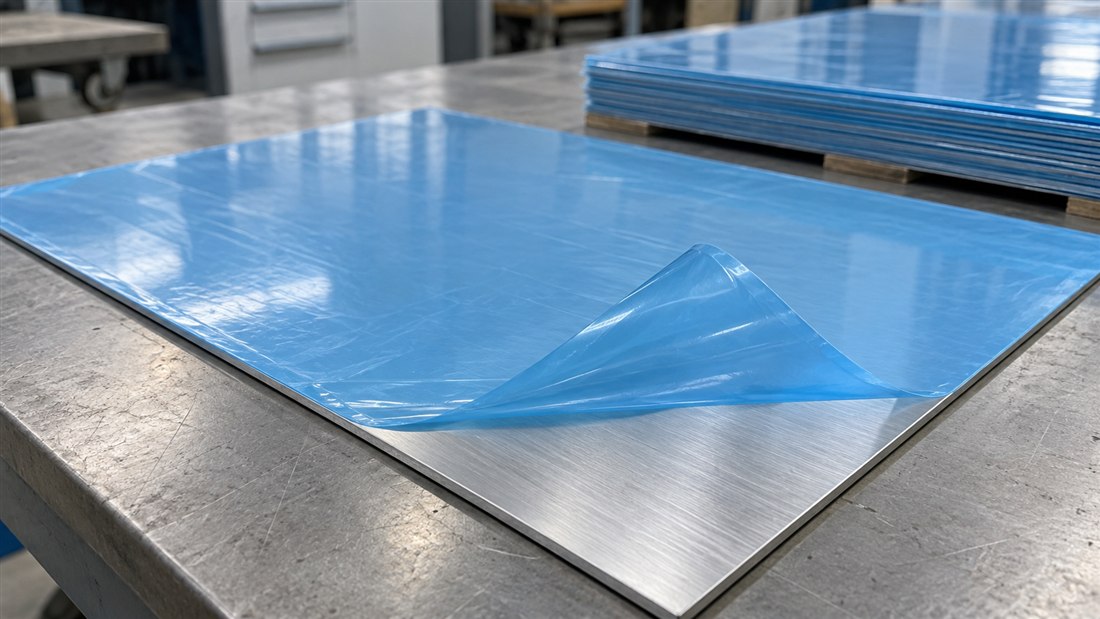
Choose aluminum sheet protective film by the surface and the complete processing route, not by film colour alone. The film should protect the required face during handling, remain suitable for the agreed fabrication steps and peel away without an unacceptable change to the finished surface. Blu...Read more »
-
Water stains on aluminum sheet often begin with moisture trapped between surfaces. Rain is only one possible source: a cold sheet pack moved into warm, humid air can collect condensation even inside a roofed warehouse. Prevention starts with dry packaging, controlled storage and a receiving pro...Read more »
-
Quick answer: For machined aluminum parts, alloy and temper alone are not enough. Buyers should define the bar diameter, diameter tolerance, straightness over a stated gauge length, surface condition, cut length, inspection method and the amount of machining stock. These requirements determine w...Read more »
-
Quick answer: Saw cutting is usually the practical choice for straight rectangular aluminum plate blanks, especially when buyers need efficient sizing and machining allowance. Waterjet cutting is better suited to profiles, internal cutouts and near-net shapes without a heat-affected zone. Neithe...Read more »
-
Specify the rolling direction before sheet is cut into blanks—not after a bend cracks or a part fails inspection. Alloy, temper and thickness remain essential, but orientation is another input that can be lost when sheets are nested, rotated and cut. For buyers of formed aluminum parts, a simple...Read more »
-
Direct answer: aluminum tube can meet its alloy and wall-thickness requirement yet still cause assembly, sealing or machining problems if ovality and straightness are not defined. Buyers should specify how each characteristic is measured, over what length and against which product standard or dr...Read more »
-
6061-T6 and 6082-T6 are both heat-treatable Al-Mg-Si extrusion alloys, but they should not be treated as automatic substitutes. In structural profile projects, 6082-T6 is often evaluated when higher mechanical strength is the priority, while 6061-T6 remains a widely used choice for welded, mach...Read more »
-
A plate that meets incoming flatness requirements can still move after machining. Distortion occurs when material removal, clamping and heat release residual stress unevenly. T651 plate is stress relieved by stretching and is often preferred for machined parts, but the temper designation cannot ...Read more »
-
Aluminum Extrusion Surface Finish Guide: Mill Finish vs Anodizing vs Powder Coating Surface finish is an important part of aluminum extrusion purchasing because it affects appearance, corrosion protection, wear resistance, dimensional fit and downstream fabrication. Mill finish, anodizing and po...Read more »
-
EXTRUSION PROCUREMENT GUIDE Aluminum Extrusion Tolerances for Project Buyers A profile can meet its alloy and temper requirement but still create assembly problems if straightness, twist, angularity, wall thickness or cut length is not defined. The drawing and purchase order should identify the...Read more »
-
2011 Aluminum Round Bar for CNC Machining: Machinability, Tolerances, Standards and Buyer Guide 2011 aluminum is a free-machining aluminum-copper alloy developed for high-speed turning and precision machining. It is widely used for screws, connectors, fittings, valve parts, instrument components...Read more »
-
ASTM B209 vs EN 485: Aluminum Sheet and Plate Standards, Tolerances and Buyer Guide ASTM B209 and EN 485 are both widely used for aluminum sheet and plate procurement, but they belong to different standards systems. ASTM B209 is commonly used in North American and international projects, while ...Read more »