7075 Aluminium Plate


7075 aluminium plate is a high-strength, heat-treatable aluminium-zinc alloy selected for heavily loaded machined parts where a high strength-to-weight ratio is required.
Supply can be specified to ASTM B209 in common tempers including T6, T651, T73, T7351, T76 and T7651. State the required temper, dimensions, tolerances, inspection documents and end use in the RFQ so the correct supply condition can be confirmed.
7075 Aluminium Plate Supply Range
| Item | Common supply range / ordering option |
|---|---|
| Standard | ASTM B209; other applicable requirements can be reviewed against the purchase specification |
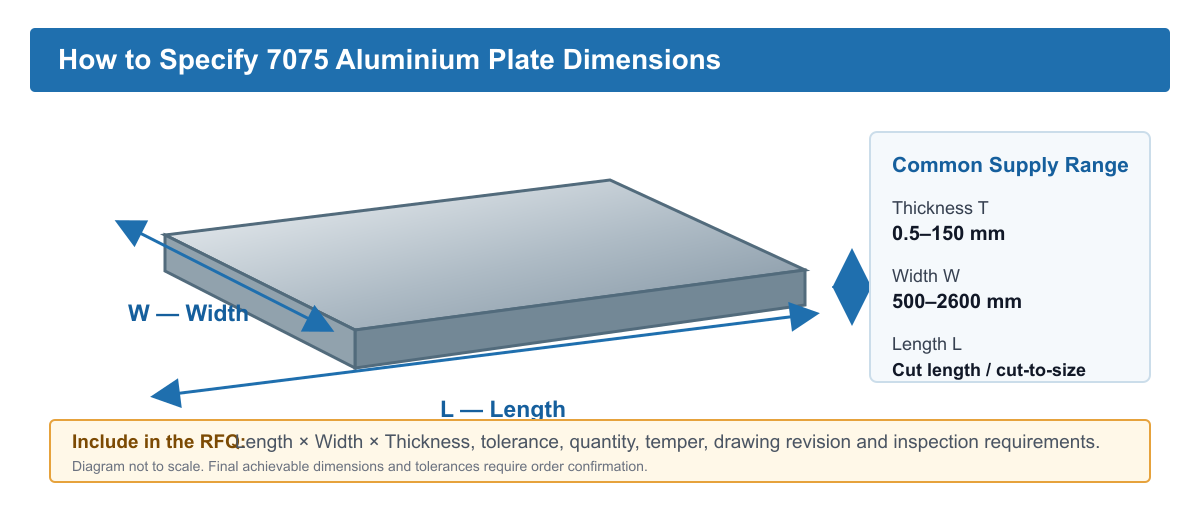
| Thickness | 0.5–150 mm |
| Width | 500–2600 mm |
| Length | Cut length or cut-to-size according to the confirmed order |
| Common tempers | T6, T651, T73, T7351, T76 and T7651 |
| Surface condition | Mill finish; protective film or other handling requirements should be stated in the RFQ |
| Documents and inspection | Material certificates and product quality inspection services are available. Required document type, test method and acceptance criteria must be agreed before order confirmation. |
How to Select the 7075 Temper
| Temper | Selection focus | Typical purchasing consideration |
|---|---|---|
| T6 | High-strength heat-treated condition | Confirm whether subsequent machining or stress-relief requirements make a stress-relieved temper more suitable. |
| T651 | High strength with stress relief by stretching | Often selected for machined plate parts where dimensional stability during material removal is important. |
| T73 / T7351 | Improved resistance to stress-corrosion cracking compared with peak-strength T6-type conditions | Used when corrosion environment and long-term reliability take priority over maximum strength. |
| T76 / T7651 | Balance of strength and corrosion performance | Confirm the governing drawing, specification and required property direction before ordering. |
Mechanical properties vary with temper, thickness and test direction. The applicable standard, purchase specification and material certificate should be used for final acceptance rather than a single generic property value.
Typical Applications
| Application area | Typical parts | What the buyer should confirm |
|---|---|---|
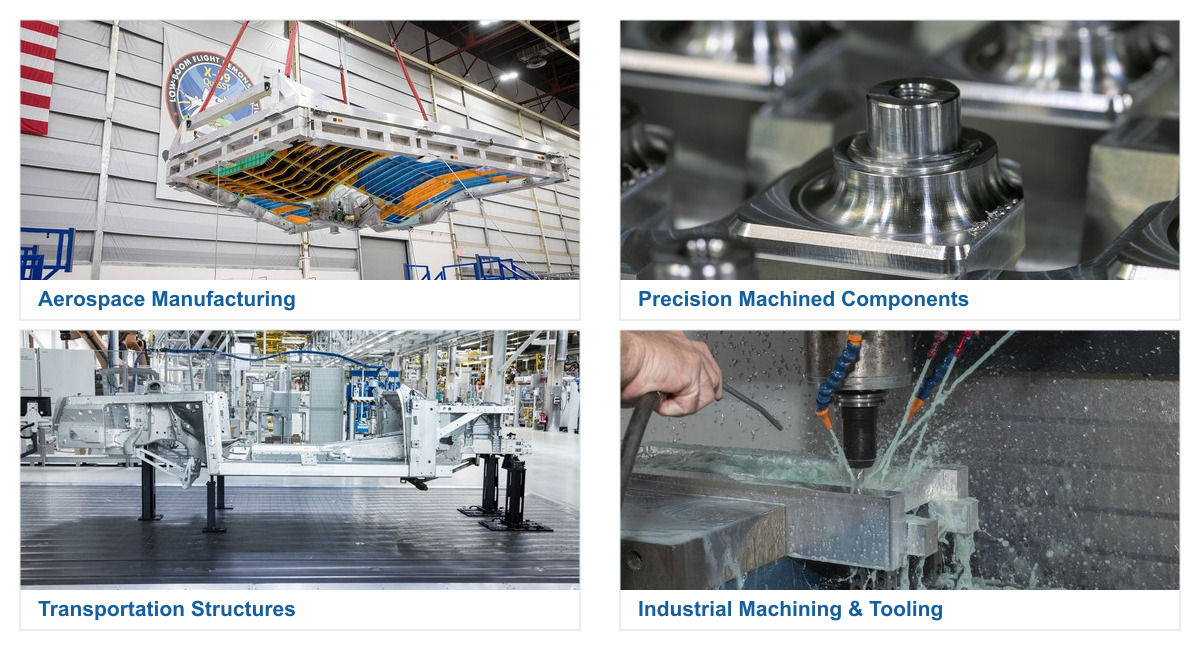
| Aerospace and high-load structures | Structural plates, fittings and machined components | Governing material specification, temper, property direction, inspection level and traceability requirements |
| Precision machining | Jigs, fixtures, tooling plates and complex machined parts | Stress-relieved temper, flatness, machining allowance and cut-size tolerance |
| Transportation equipment | High-strength brackets, frames and load-bearing components | Service loads, fatigue conditions, corrosion exposure and joining method |
| Industrial equipment | Highly loaded machine parts and lightweight assemblies | Drawing revision, critical dimensions, surface condition and acceptance documents |
Suitability for a safety-critical or regulated application must be determined from the final design, governing specification, service environment and required verification documents.
Selection Limits and Fabrication Notes
| Topic | Procurement guidance |
|---|---|
| Welding | 7075 is generally not the first choice for conventional fusion-welded structures. Confirm the joining process and required post-joining properties before selecting this alloy. |
| Corrosion exposure | For humid, marine or chemically aggressive service, review the temper, surface protection and maintenance requirements. A T73/T7351-type condition may be preferred when stress-corrosion resistance is a major concern. |
| Machining | Allow for stock removal, clamping and residual-stress effects. T651 or T7351 is commonly considered for plate that will receive substantial machining. |
| Forming | Formability is limited in high-strength tempers. Tight bends or extensive forming require a separate process review. |
| Substitution | Do not substitute 7075 for another alloy solely on nominal strength. Compare corrosion, weldability, fatigue, fracture, fabrication and approval requirements. |
Inspection and Acceptance Documents
State the required inspection scope before quotation. This avoids a mismatch between the supplied documents and the buyer’s acceptance procedure.
| Requirement | Information to include in the RFQ |
|---|---|
| Material identification | Alloy, temper, standard and any drawing or customer specification |
| Dimensional inspection | Thickness, width, length, tolerances, flatness and any critical dimensions |
| Material certificate | Required certificate type, heat/batch traceability and reported test items |
| Additional testing | Test method, governing standard, acceptance level and whether third-party witnessing is required |
| Surface acceptance | Permitted marks, protective film, packaging contact surfaces and visual acceptance criteria |
Information Needed for a 7075 Aluminium Plate Quote
- Alloy and required temper
- Applicable standard or drawing
- Thickness, width and length
- Quantity and unit of measure
- Dimensional and flatness tolerances
- Surface and protective-film requirements
- Certificate and inspection requirements
- Cutting, machining allowance and packaging needs
7075 Aluminium Plate FAQ
What is the difference between 7075-T6 and 7075-T651 plate?
Both are high-strength conditions. T651 includes stress relief by stretching after heat treatment, which is commonly considered when plate will be heavily machined and dimensional stability matters.
When should 7075-T7351 be selected instead of 7075-T651?
T7351 is generally considered when resistance to stress-corrosion cracking is more important than obtaining the highest possible strength. The final choice should follow the design specification and service environment.
Can 7075 aluminium plate be welded?
It is not normally preferred for conventional fusion-welded structures because the heat-affected region can lose strength and cracking risks require careful control. Confirm the joining method before ordering.
What affects the price of 7075 aluminium plate?
Price is affected by temper, thickness, plate size, quantity, tolerances, cutting requirements, inspection documents, testing scope, packaging and current material conditions. A complete RFQ allows a more accurate quotation.
What dimensions should be included in a 7075 plate inquiry?
Provide thickness, width, length, quantity and tolerances. For machined parts, also state machining allowance, flatness requirements, grain direction if controlled, and the drawing revision.
Request a 7075 Aluminium Plate Quote
Send the alloy temper, dimensions, quantity, standard, tolerance and inspection requirements for supply review.


