3003 Aluminium Sheet


3003 Aluminium Sheet
3003 Aluminium Sheet is a non-heat-treatable aluminum-manganese alloy widely selected where good corrosion resistance, formability and weldability are more important than high structural strength.
Compared with commercially pure 1000-series aluminum, 3003 provides higher strength while retaining good cold-forming performance. It is commonly used for general fabrication, equipment panels, food-processing components, HVAC parts, containers and formed sheet-metal products.
SASA ALUMINUM supplies ASTM B209 3003 aluminum sheet in different tempers, thicknesses and dimensions, with cut-to-size, protective film and surface finishing available according to the confirmed order.
3003-O — best formability
3003-H14 — general-purpose half-hard sheet
3003-H18 — higher hardness and strength
3003-H24 — balance of strength and formability
Request 3003 Sheet Quote
3003 Aluminium Sheet Specifications
| Item | Specification |
|---|---|
| Alloy | 3003 |
| Standard | ASTM B209 |
| Product Form | Aluminium Sheet |
| Tempers | O / H12 / H14 / H16 / H18 / H22 / H24 / H26 / Other agreed tempers |
| Typical Thickness | 0.2–5.0 mm; other thicknesses subject to specification review |
| Width | 20–2200 mm according to production capability |
| Length | 20–8000 mm / Cut to Size |
| Surface | Mill Finish / Polished / Brushed / Protective Film as required |
| Processing | Cut to Length / Shearing / Custom Size |
| Documentation | MTC / Inspection documents according to confirmed order |
Why Choose 3003 Aluminium Sheet?
| Good Formability
Suitable for bending, drawing, rolling and general sheet-metal forming. |
Corrosion Resistance
Provides good atmospheric corrosion resistance for many general applications. |
Good Weldability
Suitable for common aluminum welding and fabrication processes. |
Practical Strength
Higher strength than commercially pure aluminum while retaining good workability. |
How to Select 3003 Aluminium Temper
3003 is strengthened primarily through cold working rather than heat treatment. The temper therefore has a direct effect on strength, hardness and formability.
| Temper | General Condition | Formability | Typical Selection |
|---|---|---|---|
| O | Annealed / Soft | Excellent | Deep forming, drawing and parts requiring maximum ductility |
| H14 | Half Hard | Good | General sheet-metal fabrication and panels |
| H18 | Full Hard | Lower | Applications requiring greater stiffness and strength |
| H24 | Strain Hardened & Partially Annealed | Good | Balanced forming and strength requirements |
3003 Aluminium Chemical Composition
3003 is an aluminum-manganese alloy. Manganese is the principal alloying element and contributes to increased strength while retaining good fabrication characteristics.
| Element | Content (%) |
|---|---|
| Silicon (Si) | ≤0.60 |
| Iron (Fe) | ≤0.70 |
| Copper (Cu) | 0.05–0.20 |
| Manganese (Mn) | 1.00–1.50 |
| Zinc (Zn) | ≤0.10 |
| Other, Each | ≤0.05 |
| Other, Total | ≤0.15 |
| Aluminum (Al) | Balance |
Final batch chemistry should be confirmed by the applicable material specification and supplied MTC.
Typical Mechanical Properties
Mechanical properties vary with temper and sheet thickness. The following values are typical references for material selection and should not replace the applicable specification.
| Temper | Tensile Strength | Yield / Proof Strength | General Characteristic |
|---|---|---|---|
| O | Approx. 95–135 MPa | Approx. 35 MPa minimum | Soft condition with high ductility |
| H14 | Approx. 140–180 MPa | Higher than O temper | Half-hard condition for general fabrication |
Forming & Fabrication
3003 aluminum sheet is commonly selected where forming and fabrication are important. Temper selection should be matched to the required bending, drawing or forming operation.
3003 Aluminium Sheet Weight
3003 aluminum has a density of approximately 2.73 g/cm³. Theoretical sheet weight can be estimated from thickness and surface area.
| Thickness | Approx. Weight per m² |
|---|---|
| 0.5 mm | 1.37 kg/m² |
| 1.0 mm | 2.73 kg/m² |
| 2.0 mm | 5.46 kg/m² |
| 3.0 mm | 8.19 kg/m² |
Applications of 3003 Aluminium Sheet
| Food Equipment
Containers, covers and fabricated equipment parts |
HVAC
Ducting, covers and formed sheet components |
Heat Transfer
Fins, covers and general heat-exchange components |
| Building Components
Roofing accessories, flashing and formed panels |
General Fabrication
Bent, formed and welded sheet-metal parts |
Equipment Panels
Covers, enclosures and non-structural components |
Inspection & Quality Control
| Inspection Item | Purpose |
|---|---|
| Material Verification | Confirm 3003 alloy and material traceability |
| Thickness Measurement | Verify actual sheet thickness |
| Width & Length | Verify finished sheet dimensions |
| Surface Inspection | Check scratches, dents and visible defects |
| Temper / Mechanical Properties | Reviewed according to the confirmed product specification |
| MTC / Inspection Documents | Available according to confirmed order requirements |
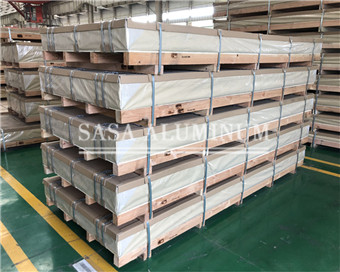
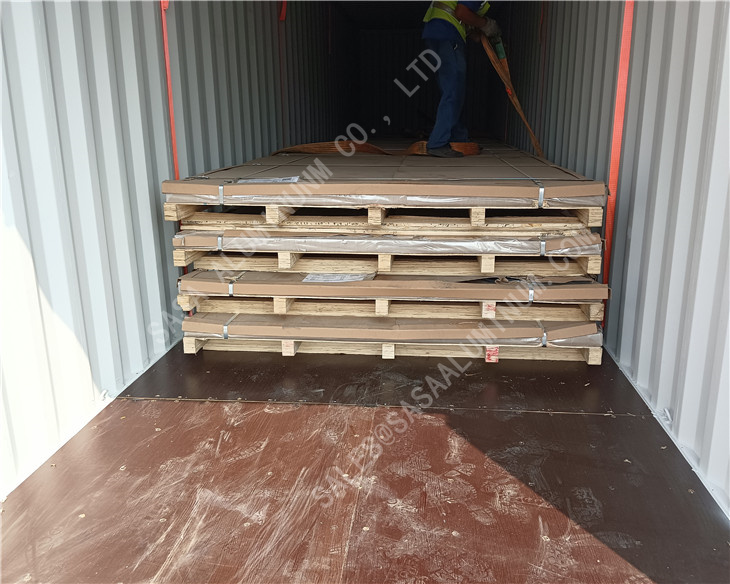
3003 Aluminium Sheet Packaging
Packaging is selected according to sheet thickness, dimensions, surface condition and transportation requirements.
 |
 |
FAQ
Is 3003 aluminum heat treatable?
No. 3003 is a non-heat-treatable aluminum alloy. Its strength is mainly increased through cold working and temper control.
What is the difference between 3003-O and 3003-H14?
3003-O is the annealed soft condition and provides the best formability. 3003-H14 is a half-hard condition with higher strength and stiffness while maintaining useful forming capability.
What is 3003-H24 used for?
H24 is commonly selected where a balance between forming performance and increased strength is required.
Can 3003 aluminium sheet be cut to size?
Yes. Custom width, length and cut-to-size supply can be reviewed according to the required thickness, dimensions and quantity.
Is 3003 suitable for structural applications?
3003 provides moderate strength and is mainly selected for forming, corrosion resistance and general fabrication rather than high-load structural applications.
Need 3003 Aluminium Sheet?
Send the required temper, thickness, width, length, quantity and surface requirement. SASA ALUMINUM can review the specification and provide a quotation for ASTM B209 3003 aluminium sheet.


