-

our Complete Guide to Identifying These Two Common Metals in Industry and Daily Use When working with metals, one of the most common questions asked is: How can you tell the difference between stainless steel and aluminum? Both materials are widely used in construction, manufacturing, and consume...Read more »
-

Quick answer: For a clean aluminum-extrusion cut, use a rigid saw, a sharp non-ferrous blade with suitable tooth geometry, secure the profile without distortion, control chips and lubricant, and measure squareness and cut length after deburring. The best setup depends on profile size, wall thick...Read more »
-
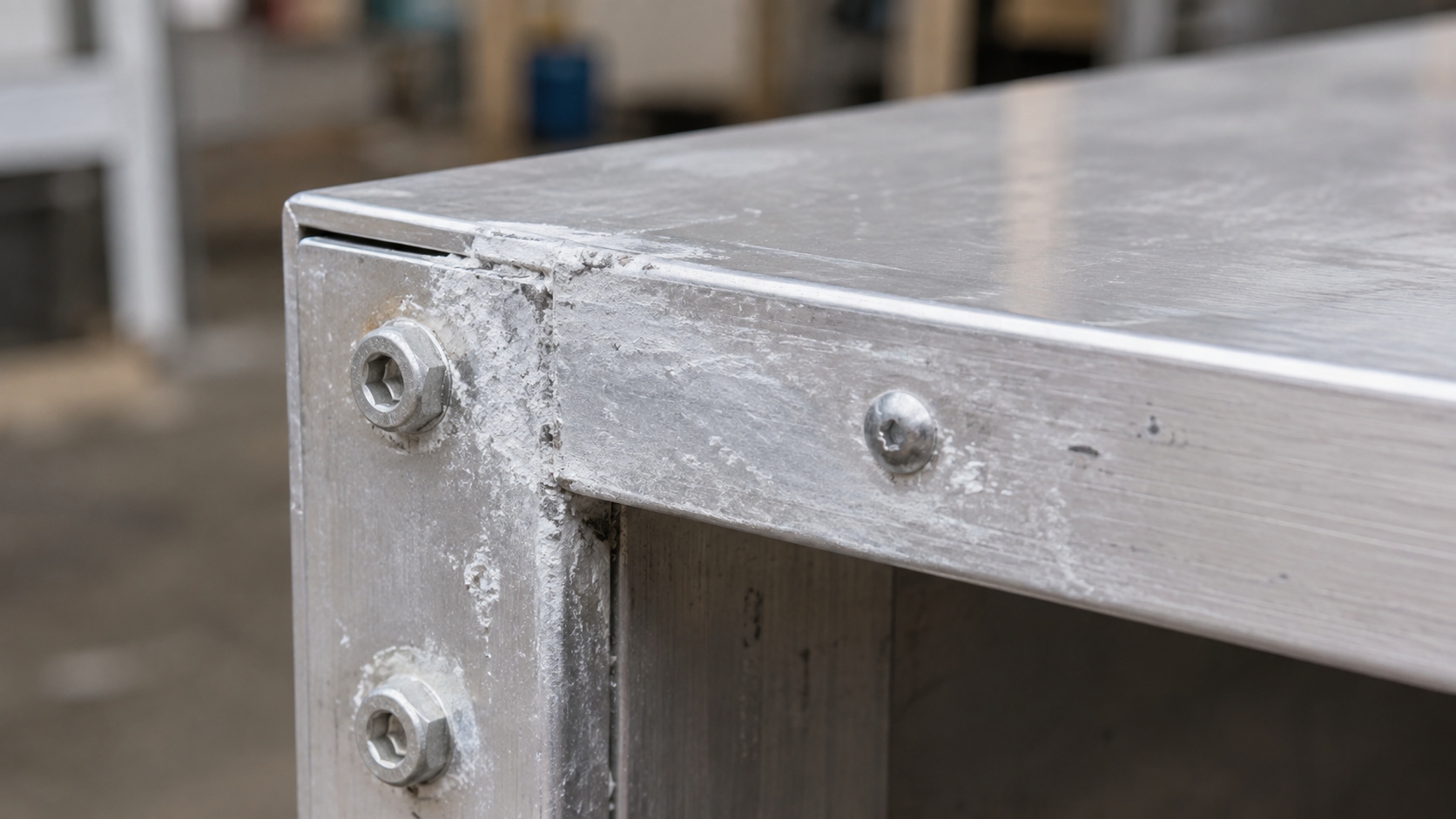
Before cleaning aluminium corrosion, determine whether the problem is surface contamination, coating damage or actual metal loss. Start with the least aggressive method approved for the finish. Cleaning can remove deposits, but it cannot restore thickness lost to pitting or prove that a compone...Read more »
-

Uncovering the Truth About Aluminum Corrosion and Protection in Real-World Applications When choosing materials for manufacturing, construction, or outdoor installations, corrosion resistance is a key factor. Many people ask: Does aluminum alloy rust? The short answer is no, aluminum alloy does n...Read more »
-

Quick answer: Pure aluminum has a density of about 2.70 g/cm³ (2,700 kg/m³ or approximately 0.0975 lb/in³) near room temperature. Commercial alloy density varies slightly with composition, so use the alloy-specific value when weight, balance or freight calculations are critical. Common Units for...Read more »
-

Understanding the Differences in Weight, Strength, and Applications Between Two Lightweight Metals In a world that’s constantly pushing for energy efficiency, performance, and sustainability, lightweight metals like aluminum and magnesium have become essential in industries such as aerospace, aut...Read more »
-

A Comprehensive Guide to Aluminum Billet, Its Production, Applications, and Benefits Aluminum is one of the most widely used metals in modern industry—lightweight, strong, and highly recyclable. One of the fundamental forms in which aluminum is processed and distributed is the aluminum billet. Th...Read more »
-

Explore the Advantages, Applications, and Material Properties of Precision Ground Aluminum Plate In the modern manufacturing and engineering world, precision is everything. Whether you’re building aerospace components, semiconductor fixtures, or jigs for CNC machines, having a flat, smooth,...Read more »
-

When it comes to non-slip surfaces that are both functional and visually appealing, 3003 aluminum diamond plate stands out as one of the most widely used materials in commercial, industrial, and residential applications. Combining the corrosion resistance of aluminum with the anti-skid benefits o...Read more »
-

When it comes to lightweight strength, excellent corrosion resistance, and superior surface finish, 6063 aluminum plate stands out as a top choice for architectural and structural applications. Widely used in building facades, window frames, railings, and precision components, 6063 offers a uniqu...Read more »
-

Aluminum Plate Thickness: Nominal Size Is Only the Starting Point A thickness chart does not by itself define a purchasable plate. Buyers must also state alloy, temper, governing standard, width and length, thickness tolerance, flatness, surface condition, grain direction, inspection and any ma...Read more »
-

Diamond plate aluminum—also known as checker plate or tread plate—is a highly durable and visually appealing material used in industrial floors, truck beds, toolboxes, ramps, stair treads, and wall panels. Its raised diamond pattern not only adds skid resistance but also enhances its rugged appea...Read more »